Category Archives: Career Development

RPL and Skills Recognition can be the solution towards career development. They will help individuals advance in their careers by acquiring the qualification needed to move to the next career stage

10 Traits of the Highly Successfull Square

10 Traits Of The Highly Successful

If you’re looking to step up in your career, and become more successful there are several things you can do to follow in the footsteps of some of the world’s most affluent and successful business leaders.

Start the day early – Getting up before it’s necessary gives you time to get settled and do what you want to do before your work routine kicks in. Whether it’s going for an early morning run, reading a book or making a good breakfast. Taking time for yourself each morning is important.

Exercise is a priority – Those who don’t make time for exercise will eventually have to make time for illness. Take time to look after yourself. Go to the gym, go for a jog, or join a sports team. Not only will the exercise allow you to think clearer and feel better by releasing healthy endorphins, but it will also act as an active stress relief.

Take time for personal hobbies – There is likely something that you’re passionate about that you don’t always make time for. It could be writing, painting, hiking, or anything that you cut out of your schedule because you’re too busy. Always make time for the things you enjoy.

Make time for family – At the end of the day, your family will be the ones that are there for you. Regardless of the economy or the success of your company, your family will always be by your side. Taking 30 minutes in the morning, or an hour at night with your family is one of the most important things you can do to keep a healthy work life balance.

Network over coffee – Attending cocktail parties is a great way to get to know a wide range of people, but they have become a social scene that involves very little actual networking. If you want to build a strong business relationship try going out for coffee in the mornings to build your new professional relationship.

Clear your mind – What truly relaxes you? For some high profile CEO’s it’s meditation or yoga, a walk in the park or listening to your favourite music. Taking this time to center yourself and clear your thoughts before or after a busy day will help keep you refreshed and mentally prepared to take control of your day.

Express gratitude everyday – Many of the wealthiest and most successful people in the world take time each day, week or month to write down everything they are grateful for. This helps keep you grounded and often brings everything into perspective.

Stay up to date with the news – Reading current events and staying up to date with what’s going on in the world and within your community is important for any business professional.

Stay passionate – You believe in the industry you’re a part of. You may be more motivated some days than others but never forget why you are passionate about the business you’re in and why you got involved with it in the first place.

Be punctual – Time is valuable. Successful people understand the value of time and show up when they said they would, every time. Respecting others time as much as your own is essential.


Succesfull-Business-PEople-square

9 Incredible Career Changes That Will Inspire You

It’s never too late to do what you want to do. If you find yourself dreaming of bigger things, you’re in good company. Some of the most successful people in the world were on completely different paths than the one they’re on now. From being stuck in an unhappy life as a sales associate or stockbroker to owning an international corporation, normal people just like you made the decision to change their lives. While we view these successful people today as “professional celebrities,” everyone has the opportunity to make a drastic change in order to be where they want to be. It won’t be easy and you’ll have to start at the bottom, but like these inspirational business executives knew, “Every pro was once an amateur, every expert was once a beginner.” The success stories below highlight some of the most well known entrepreneurs and business leaders and where they were in their 20s, before they made the decision to chase their dreams.

Martha Stewart – Worked as a stockbroker for 5 years while modeling before becoming the popular television host, writer and household name .

Mark Cuban – Was a bartender in Dallas, struggling for years before moving on to own the National Basketball Association’s Dallas Mavericks, Landmark Theatres, and Magnolia pictures.

Lloyd Blankfein- Was a successful lawyer on his way to becoming a partner at his firm before he decided to make a big switch to investment banking, later becoming CEO and Chairman of Goldman Sachs, a multinational investment banking firm.

Ralph Lauren – This leader in fashion started as a sales associate at Brooks Brothers. His entrance to success began with the creation of a tie which soon led to his launch of the Polo brand.

JK Rowling- This popular author was fired from her day job as a secretary for daydreaming about Harry Potter, several years later Harry Potter was published.

Marissa Mayer- The current CEO of Yahoo began her journey as the 20th employee of GOOGLE.

Warren Buffet- Started his legacy as an investment salesman in his early 20s and by the age of 26 had started his own investment partnership.

Richard Branson- Opened his own record shop at the age of 20, followed by his own recording studio at the age of 22, and he continues to propel forward, now owning over 400 different Virgin operations around the world.

Howard Schultz – Began his professional career as a salesman at Xerox. At the age of 26 he entered into the coffee industry and is now the CEO of Starbucks.

So next time you catch yourself dreaming about making a big career change, remember these inspiring, successful business leaders were once in the exact same position as you. It will take hard work and dedication, but if you truly want it, it will all be worth it.

resume-make-the-cut-square

Does Your Resume Make The Cut?

With such a competitive job market in Australia it can be difficult to make your resume stand out enough to get you into the interviewing stages. Recruiters and employers simply don’t have the time to read every word of your extensive resume. You may be the perfect candidate for the role, but through the initial 6 second skimming of your resume, you really need to impress. So what are employers looking for? While there’s clearly not an exact answer, there are some things we suggest keeping in mind the next time you submit your resume.

Keywords – Many companies are using digital sources to search through applicants based on keywords related to the job. This means human eyes may not even be reading your resume. The keywords that you should include are typically nouns that are used within the job description. It’s vital to include these in your CV if you wish to get that call for an interview.

Concise – Skip the self praising, long winded paragraph in your cover letter – the employer is. Instead, try writing an experience summary that briefly lists your skills and key information related to the job.

Unique – With some positions getting hundreds of applications, a generic resume and cover letter definitely won’t make the cut. Your resume and cover letter need to be tailored to the role you are applying for.

Omit the non-essentials – When you start out in your career it’s sometimes necessary to include the limited work experience you may have, even if it’s not exactly relevant. However, now that you have gained experience in the industry, you can leave out the part time jobs you had in high school. Employers want to see the experience you have that pertains to the role you are applying for.

Be qualified – While you may have all of the experience you need to fulfill the job responsibilities outlined, sometimes employers are looking to hire someone with a specific degree, diploma or certification. If you’re lacking an official qualification simply because you don’t have the time or resources to go back to school you can use your work experience to obtain that qualification. There’s a wide range of qualifications you can receive through Registered Training Organisations, for a list of qualifications offered by Get Qualified, click here.

Easy on the eyes – The layout and presentation of your resume and cover letter can make or break your chances of getting an interview. Employers generally aren’t interested in reading anything in a fancy font or a font smaller than size 11.

Short and Sweet – Generally, employers and recruiters don’t want to look through more than a couple of pages. Include the relevant information tailored to the position and leave out the rest.

Don’t get too personal - You may be proud of your footy team championships, but unless that somehow relates to the role you’re applying for, take it out.

Me, myself, and I – There is no need to include pronouns in your resume. The entire document is about you, so including “I” or “me” or your name is redundant.

If you’re struggling with creating a strong resume, you can always seek out professional help or have a friend look over your resume to ensure you haven’t missed any errors. It’s also important to build strong professional relationships as nearly 80% of all hires are made through a referral. So take your time with each application you submit, and make the most of your networking opportunities.

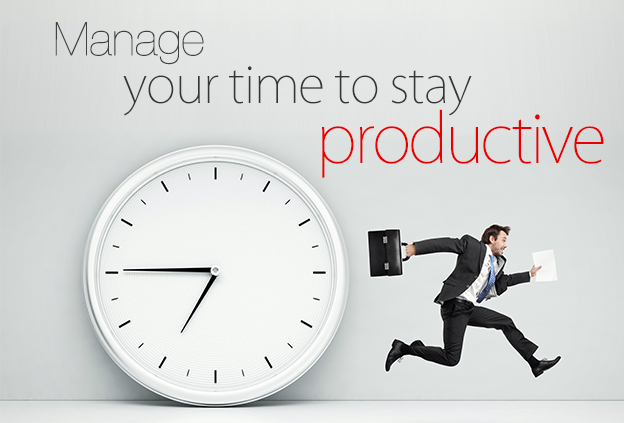
Manage-your-time-square (2)

Time Management Tips To Increase Your Productivity

We all have 60 minutes in an hour and 24 hours in a day, but it’s what you do with your time that really makes a difference. It’s easy to lose track of time, get side tracked by different tasks and then find yourself behind on your daily to-do list, but rest assured, there are some relatively simple ways to manage your time to allow yourself to be more productive.

1. Take time to plan – As soon as you get into work, disconnect yourself from everything. Take 15 – 30 minutes to simply plan out what you need to get done. Taking this time to prepare your mind and body for the day will prove beneficial to the overall productivity of the day.

2. Set realistic deadlines- Knowing what needs to be done is only half of the battle. Once you’ve outlined what needs to get done, record the deadline that you want to have it completed by. Be realistic with these deadlines, in today’s society everyone wants everything done yesterday, don’t overwhelm yourself by setting unrealistic deadlines.

3. There’s an extension for that- If you’re like 90% of society, you have several websites that seem to make time disappear right before your eyes. Whether it’s the social media sites such as Facebook, Twitter or Pinterest, or the daily news, stock trade or media sites, these can all be detrimental to your productive day. We’re all human and small doses of these sites are sometimes what helps us get through the tough days, but some of Google Chromes extensions can help keep you on track. Extensions such as Stay Focused, TitleTimeTracker, or Time Report will monitor your usage on sites, and in some cases lock you out of websites that you’ve set a time limit on; these are great to use on your personal time wasters.

4. Be unavailable- In most cases, your business won’t suffer if you don’t return a call or email immediately. While some positions absolutely must respond immediately there are others in which waiting an hour or two to respond won’t make a difference. We’re used to revolving our days around instantly responding to calls and emails, but this often distracts us and causes us to be less productive. Set times to return all calls and emails and other times to focus on the task at hand. See how much of your project you can get done if you focus solely on that one project for even one hour.

5. What are you best at? We often waste time trying to complete projects that we aren’t good at or don’t understand. Everyone has different skills and it’s okay to ask for help on projects that you struggle with. Instead of wasting hours trying to teach yourself how to get something done, ask someone who is already good at it, or if possible, try and allocate that particular task to someone that is skilled at it. This is especially important for entrepreneurs trying to be an expert in all areas. Or, if you’re an employee looking to specialise in one particular area it may be beneficial to get a certification or qualification for your specialisation thus allowing you to become an “official expert” in that area.There are an abundance of qualifications you can get based on the work experience (Recognition of prior learning or skills recognition) you’re gaining every day.

5 Ways to Achieve Your Career Goals

Five Steps To Help You Achieve Your Career Goals


  1. Set SMART Career Goals - The best way to accomplish your career goals is to know what they are and when you want to achieve them. It’s easy to say “I want to be a manager,” or “I want to run my own department,” but in order to accomplish these goals, you need to be SMART. Set goals that are specific, measurable, attainable, realistic, and timely.
  2. Network – We’ve all heard the phrase “it’s all about who you know” and while your skills and experience are extremely important, it’s also important to build relationships and have yourself recognised within the industry. Try and meet with at least one new person a month within your industry to discuss industry related currents events and build a new professional relationship.
  3. Educate Yourself – If you’re passionate about your career, make it your responsibility to read the latest books published within your industry. There are plenty of experts sharing insights they’ve gained over the years that will benefit you. If you don’t know where to start, we recommend Keith Ferazzi’s Never Eat Alone; a book that highlights the importance of building strong professional relationships to aid you in not only your career development but also in your personal life.
  4. Face Your Fears – It can be terrifying to make big changes in your career, and trying something new means you might fail, but it also means you have the ability to succeed. You have to be willing to fail in order to succeed and accomplish your goals.
  5. Advance Your Education – There’s no need to pack up your school bag and head to campus in order to get the degree or certification you deserve. If you’ve been working in the industry for as little as 6 months, you may be eligible for Recognition of Prior Learning (RPL). If your work experience has given you the skills you need to advance your career, RPL will give you the certification, diploma or degree you’ve already earned. If you think your work experience has provided you with the education you need to obtain a qualification take our free skills review and see if you’re eligible then speak with the friendly Get Qualified Australia staff about getting started!


blog-new-year

RPL and Your New Year Resolution

Are you one of the many people that made a new years resolution to find a new job, get a promotion, ask for a pay rise or even change your career?  Are you seeking more money, respect from colleagues and peers, opportunities to use your expert skills?

We are already two weeks into 2014, so what are you doing about making it happen?  Are you still sitting around dreaming about the future and how to make the changes, or are you acting on your decisions with a clear focus?  Are you already making the same old excuses that keep holding you back, or do you already have some new ones?  If you haven’t made an effort to get your career progression started, don’t keep wasting time procrastinating.

If you are currently trying to figure out the best options or considering methods to move forward, you should consider the benefits of recognition of prior learning (RPL) and skills recognition.  This can provide you with a simple, cheap, quick alternative to fulltime studying that can help to fast track your career and save you from further unnecessary hard grind in the workplace.

Get Qualified Australia are experts in RPL and skills recognition, a comprehensive method for conducting assessment used to check and confirm your current level of industry experience.  It sounds complex, but it is really quite straightforward.  Our highly qualified vocational assessors will help you document, record and collate evidence of the skills and knowledge you have gained in your working life.  They are experts in the qualifications they assess and have worked extensively in industries relating to that qualification.

The types of evidence that can be submitted by each applicant is “flexible” and will reviewed on an individual basis to ensure each assessment is customised to meet your personal experience.  Many varied forms of evidence can be submitted, including industry references, recommendations and testimonials from managers and colleagues, work appraisals, performance reviews, records of both “on the job” and “class based” study or training, projects, reports, copies of industry registrations or licences, even photos of completed work, or video evidence.

It doesn’t matter where or how you have developed your skills and gained understanding and it can be from formal training and education or informal learning – this is the true value of providing flexible evidence for the RPL assessment process.  If you have performed volunteer or charity work, or been involved in unpaid internships or work experience, this is also considered suitable evidence, because it shows you have developed skills and understanding.

All that is required to get the RPL process started is completion of a simple “self-assessment” of your career experience.  This is essential to make a decision on suitable qualifications and the units you will need to complete to be issued the qualification.  Assessors will discuss the types of evidence that you can submit for review and assist you with compiling the evidence into a comprehensive portfolio of your career and life experience that is matched against Training Packages for the qualification.

Training Packages for each qualification are developed by Australian Industry Skills Councils, based on standards for industry and give consideration to the types of jobs that would be performed at each level, particularly with regard to the “employability skills” required to work effectively in a particular job role.

In addition, RPL assessment is fully endorsed according to requirements detailed in the Australian Qualifications Framework (AQF), the national guidelines for how vocational training assessment is conducted and how qualifications are issued in Australia.  The Training Packages for vocational qualifications are aimed at ensuring people are “job ready” upon completion.

The RPL and skills assessment process developed by Get Qualified Australia uses specialised checklists and evidence verification systems based on the Training Package for each qualification.  This confirms and validates your specific level of understanding of the key industry requirements to be considered “competent”.

Professional assessors provide guidance and support throughout the RPL assessment process to ensure evidence is relevant and relates directly to the qualification, so you don’t waste time.  They will help advise you on specific evidence you can submit that will be sufficient, valid and current so you can be issued with a qualification from one of our Registered Training Organisation (RTO) partners.

For certain trade qualifications, there is also a requirement to undertake practical assessment for defined “technical high risk” units of the qualification.  This will usually only take one or two days to complete either “onsite” where you work, or in a “workshop” training environment.  This practical assessment is necessary to ensure RPL applicants are “competent” and can meet the expected industry quality and safety standards.  Qualified trade assessors conduct the practical assessments for trades, so your professional skills will be verified and confirmed by an industry expert.

Get Qualified Australia has partnership agreements with many of Australia’s leading RTO’s, so you will receive a nationally recognised qualification that proves your career experience.  This qualification will boost your resume, enable potential for promotions, pay rises and new job options, but it can also be used to obtain exemptions if you consider proceeding with study at a higher level.

All that is required to commence the RPL process is to complete a simple career self-assessment, then send in your evidence.  An assessor will do the rest – review and compiling evidence, provide advice, conduct reference checks, verify your skills and experience – so you can get on with your work and personal life.

The RPL process has no fixed time frame for completion, but if you have sufficient valid evidence that demonstrates you are competent, you could be issued with a qualification within weeks.  It depends how long it takes for the evidence to be submitted, compiled, review to be undertaken and a competency decision made by the skills assessor.

All vocational qualifications in Australian allow for RPL, so options are extensive and varied.  You should consider your options today and act upon those resolutions.  Get qualified and advance your career prospects now and leave the hard times behind you.

graduate

Preparing for RPL Assessment

To have your skills formally recognised in the Australian Vocational Education and Training (VET) system, Skills Assessors must make sure you have a sufficient level skills and knowledge required to meet the expected industry standards. This means you will be involved in a comprehensive Assessment process that covers the content of all Units of Competency for the Qualification you are seeking.

Although this process is structured around detailed Training Packages, many aspects of the process are relatively informal and the RPL provides great flexibility. This is highlighted by the fact that it is a self paced process.  You will have a three (3) month time frame to submit your evidence.

You can submit your evidence at anytime during the RPL process as we will provide you with a secure filesharing link so you can upload evidence. The system we use ensures that when you send evidence in electronic format, it is full encrypted and cannot be accessed by any other third party.

There is also a great amount of flexibility in the form of evidence that you can provide to prove your competency. Assessment for RPL is a process of reviewing the evidence you provide and matching your skills, knowledge and experience against the Elements and Performance Criteria in the specific Units of Competency for the Qualification.  This process is commonly known as “skills mapping”.

RPL Assessment will take place in a variety of ways, including your requirement to undertake “self-assessment”. This provides a valuable opportunity for reviewing and analysing your career experience, as well as gathering together documentation and evidence of your skills and knowledge for submission.

Being prepared in advance will save you valuable time and effort, hopefully making the RPL process stress-free to complete.  Here are some tips and hints for you:
  • Be prepared to talk about your job roles and work history which will be recorded by Assessor as a Competency Conversation. This will take place throughout the RPL process, right from the initial stages of making an enquiry. All discussion can have relevance and show your experience and knowledge to be submitted as final evidence.
  • Review your Resume / CV for submission and list all your duties and responsibilities for all jobs. Be sure to list any volunteer or unpaid work, internships, etc as they also show you have gained experience.
  • Contracts of Employment are essential as they validate your current position of employment against details listed in your resume.  Ask your employer for a copy if you don’t have one.
  • Position Description detailing your duties and responsibilities in your job will be valid evidence to match with your Contract of Employment. If you don’t currently have one, this is a chance to work with your employer to develop a Position Description that is relevant to the job that you are performing.
  • Performance Reviews or Appraisals are valid evidence that shows how effectively you have performed in your job role. If you don’t have a copy of your most recent review check if it available from your Manager or HR department.
  • Consider the people within your business / company or any colleagues that you have within the industry that are willing to provide you with a reference. Be sure to contact them and explain the RPL process so that they can be ready to provide you with written references, or so they can be prepared for contact later to provide you testimonials or verbal reference checks.
  • Discuss the RPL process with your Employers and Managers. Your workplace is likely to be highly supportive of your efforts to gain Qualifications and might be willing to provide all the information that you need. Be sure to advise your employer that work based documentation might be required for submission as evidence. Be sure to clarify any issues in relation to Intellectual Property Rights, Confidentiality, Trademarks, etc. If required, business Managers can contact your Assessor to obtain further clarification of the RPL process if required.
  • Think about the people you work with that can confirm your experience and skill level. Think about current or recent Managers or Supervisors who you have worked with in the past 3 years – this is the realistic time frame for valid references. You may also have community group contacts or even clients themselves who can verify your skills and experience. References don’t have to only be from your current Employer or Managers.
  • Gather together copies of any Qualification Certificates and Academic Transcripts that you have for any training you have completed previously. This can be formal or informal training you have undertaken both on and off the job. If you have participated in work based training you might be able to obtain a record from your employer that you can submit as evidence.
  • If you think that you have other relevant evidence or methods you can use to verify your experience and be sure to discuss with your Assessor to clarify if it will be valid to submit. You could be surprised by the diverse forms of evidence you can submit, so don’t be afraid to make suggestions.
If you spend time preparing and organising detailed information and evidence in advance, the process of completing RPL will be much more efficient.  Your RPL Application can be sent to the RTO once the Skills Assessor has reviewed your evidence and established that you have supplied sufficient current and relevant evidence to determine you are competent.
Issuing the Qualification will be a quick proecess as the RTO will review the RPL Assessment documents and the evidence you supplied for final verification of competency.  You will generally receive your Qualification within 2 – 4 weeks.
Detailed information kits will be provided by your Skills Assessor when you commence the RPL process and they can answer any questions that you have.
If you would like any further information on RPL, contact GQ Australia
A solid resume drives your career

A Solid Resume Drives Your Career

I’m sure you already know that a good resume can mean the difference between having an interview for your dream job, or missing out on the perfect opportunity.  Your resume should make a positive first impression with potential employers.  They use it to check you have the experience required for the job, analyse your attention to detail and check the quality of writing and communication skills.

With Recognition of Prior Learning (RPL), your resume doesn’t have to be fancy and you won’t get pulled up if there are mistakes or errors, because you are not selling yourelf.  It simply needs to be well detailed and factual content about your previous jobs.

Factual is the key word that you must consider.  It is common knowledge that people tend to create a resume that suits the specifics of a job application, with employment gaps often being filled in, or duties and responsibilities being polished up.  If you are completing a qualification using RPL assessment, then this type of resume should be avoided – you are not window dressing your career, you are listing specific detail of your knowledge, skills and experience.

The first step of the RPL process is to have a Skills Assessor review your past and current career history.  This is where your resume is required.  Units of Competency for the qualification you are completing will be mapped against your career experience.

You need to pay more attention to the quality and volume of the content, rather than how it is formatted or how appealing the design is to the reader.  In particular, you must be completely honest about dates of employment, names of employers and the key duties and tasks that were performed in those jobs.

This is essential, because our Assessors will cross reference job duties listed in your career history against other evidence you provide, to ensure it matches the Elements, Performance Criteria and Employability Skills in each of the Units within the Qualification.

Elements can be considered the key job duties and the Performance Criteria are the steps and tasks taken to fulfill a duty effectively.  Employability Skills would be the key job responsibilities and interchangeable industry skills that ensure you can perform at the expected industry standards, in a range of job roles and positions.

Evidence to be verified against what is listed in your resume includes contracts of employment, job descriptions, performance appraisals, work reviews, references from employers and testimonials from industry colleagues.

Additionally, if your resume says that you can prepare a budget, then you will need to show evidence that this is true, with valid work examples to back it up.  Because we make qualification recommendations based on what you tell us in your resume, you are just wasting time if you can’t prove that you have experience once you enrol to complete a qualification.

The evidence you are required to provide simply backs up your resume. If you can’t do something or don’t have experience, that is OK.  Just be honest and we can make recommendations to suit your personal career history.

Spelling errors, typos or simple mistakes contained in your resume are not important for RPL, although they should still be avoided.  We also don’t require a summary that says you are a wonderful hardworking and honest person with amazing people skills and a desire to be the best you can.  This kind of fluffy and generalised wording can’t be matched against Performance Criteria, so it’s not needed.

Of course, once you complete  RPL assessment and receive a copy of your new qualification, you will definitely need to update of your resume to show this career development.  This is when you can introduce some of the more descriptive writing and elaboate formatting to impress potential employers.

To help you out, here are some good websites and blog articles for writing resumes that will help you get shortlisted for your dream job interview.

From Resume Bear blog Resume Revamp: Would You Hire Yourself

From The Undercover Recruiter 10 Top Features You Must Include in Your Resume