

Monthly Archives: April 2014

5 Things To Ask Your New Boss

Five Things To Ask Your New Boss

Whether you’re entering a new role or have a new manager taking over your department, there are several important questions you need to discuss with them in order to ensure you both have a strong working relationship.

1) What is your management style? If your manager is hands on, then make sure you provide regular updates on all of your assignments and ask for their input regularly. If they prefer to delegate tasks, take care of the details and just report in with major updates.

2) How do you like to process information? Some managers prefer face to face conversations to discuss updates and happenings, while others work better by seeing the information summarized in an email. Understanding how they prefer to work will make both of your jobs easier.

3) Do you prefer to have your information delivered formally or informally? If your new boss is one for formality, it’s important to take the time to prepare thorough documents outlining your progress. If they are comfortable with a verbal update then don’t waste your time putting everything together in an official document.

4) Are there any courses or training programs you think I should enrol in to improve my productivity in the workplace? This is a perfect opportunity to know what your boss is looking for. They will likely have recommendations for programs or courses that will assist your professional development for the role. Some businesses even offer 5) How can I get where I want to be? Outline a goal you have in mind and wish to accomplish over the next 3 or 6 months, and ask your new boss what you need to do in order to accomplish it. This will allow them to know which projects are of interest to you, and which projects will assist you in acquiring the background you need to move forward with your goal.


5 Tips That Entrepreneurs and Management Must Remember

Five Tips That Entrepreneurs and Management Must Remember

The always changing business world can be hard to keep up with, and over the last few years there have been many significant changes to the way successful businesses run. Some important components to consider for your business in 2014 are:

1. People expect free.

There was a time when people used to pay for everything; consultations, documents, assessments, and anything that took up your time – however, this time has ended. If you haven’t noticed yet, things have changed and now you can get virtually anything for free. From free apps and downloads to free consultations and samples. If you want to be a strong competitor in your industry it’s important to stay up to par with the business standards in your industry, and provide free, when free is expected.

2. Internal Resources.

Over the past decade, we have seen a strong shift from having websites created, updated and maintained externally to having an in house professional take care of the majority of the work. As an entrepreneur you may not specialise in web development but this is the year to familiarise yourself with the ins and outs of web development and maintenance. This will undoubtedly save you headaches in the future.

3. You are your brand.

You can build the strongest business brand in history, but if the Founder, CEO, or President have a negative reputation whether it’s industry related or not, it will affect your business. People have learned to do their research, so it’s important to keep a clean and positive reputation.

4. Stay positive.

You’ll notice that people will either say they love your idea and tell you it’s perfect, or tell you one hundred reasons why it won’t work and why you can’t do it. Find mentors or entrepreneurial inspirations that you can sit down with and learn from. Take their advice, and learn from their mistakes.

5. Expect failure.

Failing is how you learn to succeed. It takes risk, practice, and unfortunately a lot of trial and error to get your business where you want it to be. There will be struggles along the way, and it’s okay to get upset about them. But it’s important to move on and and continue trying new ideas.

Overall, in business it’s essential to stay up to date and aware of what’s going on within your industry. With constant advances in technology and updates to business processes, entrepreneurs need to keep themselves in the know more so than ever before. Following these tips will assist you in successfully accomplishing your business goals in 2014.

10 Traits of the Highly Successfull Square

10 Traits Of The Highly Successful

If you’re looking to step up in your career, and become more successful there are several things you can do to follow in the footsteps of some of the world’s most affluent and successful business leaders.

Start the day early – Getting up before it’s necessary gives you time to get settled and do what you want to do before your work routine kicks in. Whether it’s going for an early morning run, reading a book or making a good breakfast. Taking time for yourself each morning is important.

Exercise is a priority – Those who don’t make time for exercise will eventually have to make time for illness. Take time to look after yourself. Go to the gym, go for a jog, or join a sports team. Not only will the exercise allow you to think clearer and feel better by releasing healthy endorphins, but it will also act as an active stress relief.

Take time for personal hobbies – There is likely something that you’re passionate about that you don’t always make time for. It could be writing, painting, hiking, or anything that you cut out of your schedule because you’re too busy. Always make time for the things you enjoy.

Make time for family – At the end of the day, your family will be the ones that are there for you. Regardless of the economy or the success of your company, your family will always be by your side. Taking 30 minutes in the morning, or an hour at night with your family is one of the most important things you can do to keep a healthy work life balance.

Network over coffee – Attending cocktail parties is a great way to get to know a wide range of people, but they have become a social scene that involves very little actual networking. If you want to build a strong business relationship try going out for coffee in the mornings to build your new professional relationship.

Clear your mind – What truly relaxes you? For some high profile CEO’s it’s meditation or yoga, a walk in the park or listening to your favourite music. Taking this time to center yourself and clear your thoughts before or after a busy day will help keep you refreshed and mentally prepared to take control of your day.

Express gratitude everyday – Many of the wealthiest and most successful people in the world take time each day, week or month to write down everything they are grateful for. This helps keep you grounded and often brings everything into perspective.

Stay up to date with the news – Reading current events and staying up to date with what’s going on in the world and within your community is important for any business professional.

Stay passionate – You believe in the industry you’re a part of. You may be more motivated some days than others but never forget why you are passionate about the business you’re in and why you got involved with it in the first place.

Be punctual – Time is valuable. Successful people understand the value of time and show up when they said they would, every time. Respecting others time as much as your own is essential.


Succesfull-Business-PEople-square

9 Incredible Career Changes That Will Inspire You

It’s never too late to do what you want to do. If you find yourself dreaming of bigger things, you’re in good company. Some of the most successful people in the world were on completely different paths than the one they’re on now. From being stuck in an unhappy life as a sales associate or stockbroker to owning an international corporation, normal people just like you made the decision to change their lives. While we view these successful people today as “professional celebrities,” everyone has the opportunity to make a drastic change in order to be where they want to be. It won’t be easy and you’ll have to start at the bottom, but like these inspirational business executives knew, “Every pro was once an amateur, every expert was once a beginner.” The success stories below highlight some of the most well known entrepreneurs and business leaders and where they were in their 20s, before they made the decision to chase their dreams.

Martha Stewart – Worked as a stockbroker for 5 years while modeling before becoming the popular television host, writer and household name .

Mark Cuban – Was a bartender in Dallas, struggling for years before moving on to own the National Basketball Association’s Dallas Mavericks, Landmark Theatres, and Magnolia pictures.

Lloyd Blankfein- Was a successful lawyer on his way to becoming a partner at his firm before he decided to make a big switch to investment banking, later becoming CEO and Chairman of Goldman Sachs, a multinational investment banking firm.

Ralph Lauren – This leader in fashion started as a sales associate at Brooks Brothers. His entrance to success began with the creation of a tie which soon led to his launch of the Polo brand.

JK Rowling- This popular author was fired from her day job as a secretary for daydreaming about Harry Potter, several years later Harry Potter was published.

Marissa Mayer- The current CEO of Yahoo began her journey as the 20th employee of GOOGLE.

Warren Buffet- Started his legacy as an investment salesman in his early 20s and by the age of 26 had started his own investment partnership.

Richard Branson- Opened his own record shop at the age of 20, followed by his own recording studio at the age of 22, and he continues to propel forward, now owning over 400 different Virgin operations around the world.

Howard Schultz – Began his professional career as a salesman at Xerox. At the age of 26 he entered into the coffee industry and is now the CEO of Starbucks.

So next time you catch yourself dreaming about making a big career change, remember these inspiring, successful business leaders were once in the exact same position as you. It will take hard work and dedication, but if you truly want it, it will all be worth it.

how-we-assess-your-qual-square

How We Assess Your Skills For A Qualification

Feeling like you may have hit a plateau in your career? There is a way to progress further, without going back to school for a new qualification or certification. Get Qualified Australia specialises in recognition of prior learning and skills recognition to help you use the skills and experience you’ve gained over the years to obtain a certification, diploma or post graduate qualification in your respected field.

Our team is here to help you obtain the new qualification as easily as possible. Here’s how we’re able to help you get the certification you need:

  • We work closely with Registered Training Organisations (RTOs)
  • We strictly follow the registration and compliance requirements of our RTO partners to ensure your new qualification is recognised across the country
  • We thoroughly analyse your work experience to determine any gaps in your experience that may need to be filled and help coordinate gap training
  • We organise the paperwork and work out all of the details to get you the certification, diploma or degree you’ve earned

So what does this mean for you? If you’ve been working in a particular industry and feel you have the skill set you need to make the next step, talk to us to see just how close you are to obtaining that qualification. Your work experience, volunteer experience, and internships can all be put towards your new certification.

Regardless of your industry or trade, we can help! We offer hundreds of qualifications in the following industries:

  • Agriculture Horticulture And Conservation And Land Management
  • Automotive Industry Retail Service And Repair
  • Beauty
  • Business Services
  • Community Services
  • Construction Plumbing And Services
  • Defence
  • Electrotechnology
  • Financial Services
  • Food Processing
  • Forest And Forest Products
  • Foundation Skills
  • Furnishing
  • Hairdressing
  • Health
  • Information And Communications Technology
  • Integrated Telecommunications
  • Manufacturing
  • Maritime
  • Metal And Engineering
  • Property Services
  • Retail Services
  • Seafood Industry
  • Sport Fitness And Recreation
  • Sustainability
  • Textiles Clothing And Footwear
  • Tourism Travel And Hospitality
  • Training And Education
  • Transport And Logistics
  • Water

For a full list of qualifications, click here.


resume-make-the-cut-square

Does Your Resume Make The Cut?

With such a competitive job market in Australia it can be difficult to make your resume stand out enough to get you into the interviewing stages. Recruiters and employers simply don’t have the time to read every word of your extensive resume. You may be the perfect candidate for the role, but through the initial 6 second skimming of your resume, you really need to impress. So what are employers looking for? While there’s clearly not an exact answer, there are some things we suggest keeping in mind the next time you submit your resume.

Keywords – Many companies are using digital sources to search through applicants based on keywords related to the job. This means human eyes may not even be reading your resume. The keywords that you should include are typically nouns that are used within the job description. It’s vital to include these in your CV if you wish to get that call for an interview.

Concise – Skip the self praising, long winded paragraph in your cover letter – the employer is. Instead, try writing an experience summary that briefly lists your skills and key information related to the job.

Unique – With some positions getting hundreds of applications, a generic resume and cover letter definitely won’t make the cut. Your resume and cover letter need to be tailored to the role you are applying for.

Omit the non-essentials – When you start out in your career it’s sometimes necessary to include the limited work experience you may have, even if it’s not exactly relevant. However, now that you have gained experience in the industry, you can leave out the part time jobs you had in high school. Employers want to see the experience you have that pertains to the role you are applying for.

Be qualified – While you may have all of the experience you need to fulfill the job responsibilities outlined, sometimes employers are looking to hire someone with a specific degree, diploma or certification. If you’re lacking an official qualification simply because you don’t have the time or resources to go back to school you can use your work experience to obtain that qualification. There’s a wide range of qualifications you can receive through Registered Training Organisations, for a list of qualifications offered by Get Qualified, click here.

Easy on the eyes – The layout and presentation of your resume and cover letter can make or break your chances of getting an interview. Employers generally aren’t interested in reading anything in a fancy font or a font smaller than size 11.

Short and Sweet – Generally, employers and recruiters don’t want to look through more than a couple of pages. Include the relevant information tailored to the position and leave out the rest.

Don’t get too personal - You may be proud of your footy team championships, but unless that somehow relates to the role you’re applying for, take it out.

Me, myself, and I – There is no need to include pronouns in your resume. The entire document is about you, so including “I” or “me” or your name is redundant.

If you’re struggling with creating a strong resume, you can always seek out professional help or have a friend look over your resume to ensure you haven’t missed any errors. It’s also important to build strong professional relationships as nearly 80% of all hires are made through a referral. So take your time with each application you submit, and make the most of your networking opportunities.

Manage-your-time-square (2)

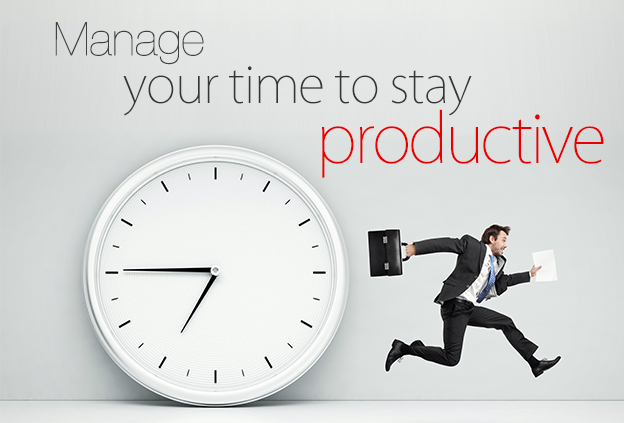
Time Management Tips To Increase Your Productivity

We all have 60 minutes in an hour and 24 hours in a day, but it’s what you do with your time that really makes a difference. It’s easy to lose track of time, get side tracked by different tasks and then find yourself behind on your daily to-do list, but rest assured, there are some relatively simple ways to manage your time to allow yourself to be more productive.

1. Take time to plan – As soon as you get into work, disconnect yourself from everything. Take 15 – 30 minutes to simply plan out what you need to get done. Taking this time to prepare your mind and body for the day will prove beneficial to the overall productivity of the day.

2. Set realistic deadlines- Knowing what needs to be done is only half of the battle. Once you’ve outlined what needs to get done, record the deadline that you want to have it completed by. Be realistic with these deadlines, in today’s society everyone wants everything done yesterday, don’t overwhelm yourself by setting unrealistic deadlines.

3. There’s an extension for that- If you’re like 90% of society, you have several websites that seem to make time disappear right before your eyes. Whether it’s the social media sites such as Facebook, Twitter or Pinterest, or the daily news, stock trade or media sites, these can all be detrimental to your productive day. We’re all human and small doses of these sites are sometimes what helps us get through the tough days, but some of Google Chromes extensions can help keep you on track. Extensions such as Stay Focused, TitleTimeTracker, or Time Report will monitor your usage on sites, and in some cases lock you out of websites that you’ve set a time limit on; these are great to use on your personal time wasters.

4. Be unavailable- In most cases, your business won’t suffer if you don’t return a call or email immediately. While some positions absolutely must respond immediately there are others in which waiting an hour or two to respond won’t make a difference. We’re used to revolving our days around instantly responding to calls and emails, but this often distracts us and causes us to be less productive. Set times to return all calls and emails and other times to focus on the task at hand. See how much of your project you can get done if you focus solely on that one project for even one hour.

5. What are you best at? We often waste time trying to complete projects that we aren’t good at or don’t understand. Everyone has different skills and it’s okay to ask for help on projects that you struggle with. Instead of wasting hours trying to teach yourself how to get something done, ask someone who is already good at it, or if possible, try and allocate that particular task to someone that is skilled at it. This is especially important for entrepreneurs trying to be an expert in all areas. Or, if you’re an employee looking to specialise in one particular area it may be beneficial to get a certification or qualification for your specialisation thus allowing you to become an “official expert” in that area.There are an abundance of qualifications you can get based on the work experience (Recognition of prior learning or skills recognition) you’re gaining every day.

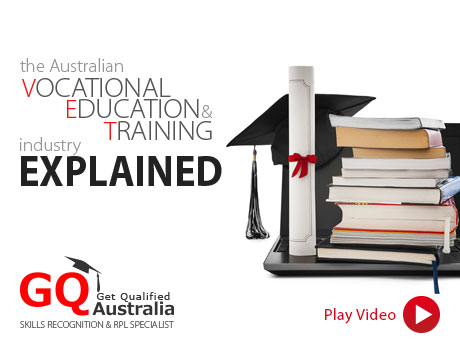
How The Australian Vocational Education & Training (VET) Industry Works

Video: How The Australian Vocational Education & Training (VET) Industry Works


Recognition of Prior Learning (RPL) in Australia is a simple process that many people in Australia are utilising to their advantage. You might be interested in how the Australian Vocational Education & Training Industry (VET Industry) works, and how it relates to skills recognition and RPL. Mr. GQ from Get Qualified Australia explains it all in this video so that when you’re ready to obtain a nationally recognised qualification, your experience is as simple as possible!

Transcript:

Hi, my name is Mr GQ and I am the founder of Get Qualified Australia commonly known as GQ Australia.

GQ Australia is a national training organisation with a strong focus on skills assessment and Recognition of Prior Learning (RPL). This government endorsed concept was introduced to recognise the skills, knowledge and experience of individuals in all industries.

In Australia we have the Australian Vocational Education and Training (VET) sector that provides individuals with knowledge and skills that are relevant to their work role. In the VET sector accredited training leads to a formal nationally recognised qualification.

These qualifications are all linked to the Australian Qualifications Framework (AQF) which specifies the standards for educational qualifications in Australia. While the AQF specifies the standards, Registered Training Organisations (RTO) are authorised to issue formal qualifications aligned to appropriate levels that vary from a certificate 1 up to level 10 for a doctorate degree. VET is a competency-based system of education that assesses an individual to see if they possess the skills, knowledge or attributes to perform a particular task in the workplace. The student is then deemed competent or not yet competent.

GQ Australia regularly signs agreements with RTOs which allow us to offer over 500 nationally recognised qualifications across an extensive range of industries. Our professional and friendly team of highly qualified trainers and assessors are here to assist you in your journey towards achieving an Australian qualification. Our systems and processes are flexible, convenient and compliant at competitive prices.

The Get Qualified Team looks forward to assisting you to Get Qualified.

5 Ways to Achieve Your Career Goals

Five Steps To Help You Achieve Your Career Goals


  1. Set SMART Career Goals - The best way to accomplish your career goals is to know what they are and when you want to achieve them. It’s easy to say “I want to be a manager,” or “I want to run my own department,” but in order to accomplish these goals, you need to be SMART. Set goals that are specific, measurable, attainable, realistic, and timely.
  2. Network – We’ve all heard the phrase “it’s all about who you know” and while your skills and experience are extremely important, it’s also important to build relationships and have yourself recognised within the industry. Try and meet with at least one new person a month within your industry to discuss industry related currents events and build a new professional relationship.
  3. Educate Yourself – If you’re passionate about your career, make it your responsibility to read the latest books published within your industry. There are plenty of experts sharing insights they’ve gained over the years that will benefit you. If you don’t know where to start, we recommend Keith Ferazzi’s Never Eat Alone; a book that highlights the importance of building strong professional relationships to aid you in not only your career development but also in your personal life.
  4. Face Your Fears – It can be terrifying to make big changes in your career, and trying something new means you might fail, but it also means you have the ability to succeed. You have to be willing to fail in order to succeed and accomplish your goals.
  5. Advance Your Education – There’s no need to pack up your school bag and head to campus in order to get the degree or certification you deserve. If you’ve been working in the industry for as little as 6 months, you may be eligible for Recognition of Prior Learning (RPL). If your work experience has given you the skills you need to advance your career, RPL will give you the certification, diploma or degree you’ve already earned. If you think your work experience has provided you with the education you need to obtain a qualification take our free skills review and see if you’re eligible then speak with the friendly Get Qualified Australia staff about getting started!