

Monthly Archives: December 2015

InterviewTips

Winning the Day: Top 10 Interview Tips

Congratulations! They called. They like the skills and qualifications on your resume and have stepped up to schedule your interview. If you’ve moved up a notch or two due to Recognition of Prior Learning (RPL), all the better. That puts you miles ahead of many. Lock in the job by considering a few important points and prepping properly.

1. Do Your Homework: Research the company website and review online information about them, such as SEC filings, and analyst’s reports. Seek out some inside intel by talking with friends, friends of friends, relatives, bloggers, or anyone else that has worked there to understand the culture.

2. Know the Quizmaster: Find out who will be interviewing you and do a little research on them to get a bead on their strengths and focus on their areas of interest. Also, score points for greeting them by name.

3. Tell the truth: Always. If a weakness rears its ugly head, and you know yours better than anyone, plan ahead of time how to turn that negative into a positive by addressing the issue with how you’ve improved performance. Here’s where skills recognition can take a front seat to the “pants on fire” applicant making things up to get the job. Use information from your RPL portfolio to illustrate expertise appropriate to the job.

4. Craft Your Story: Everyone’s got one. Make sure you’ve practiced yours and that is illustrates your experience and parallels the position you seek.

5. Copycat Chat: Match the interviewer’s tone and body language, taking cues from them to fit in.

6. Listen: Really listen, and hard, to what the interviewer is saying, and asking. Then take a moment to think before you respond or speak, considering the best answer. You would be surprised what a difference a few seconds spent organising your thoughts can make.

7. Don’t Ramble: Answer the interviewer’s questions with a clear, concise reply. This is a conversation, not a tell-all, so leave the fine details out of it unless otherwise requested.

8. Ask for the Job: You don’t get what you don’t ask for. State it plainly and politely, emphasising why you’re the right choice.

9. Manners Matter: Shake hands and say thank you at the end of the interview, regardless of how it went.

10. Send a follow-up thank you note: Bonus points for a handwritten note or a nicely typed letter with a signature, on nice paper.

Putting all these tips into practice will really help push your name to the top of the list. Additional rules of etiquette that go a long way are simple.

Know where you’re going and where to park or what bus to take, allowing ample time so you won’t be late. Plan to arrive 30 minutes ahead of time, but don’t enter the office or location more than ten minutes in advance. If you’re early, use the time for some preparatory review.

Choose a clean, well-maintained, appropriately-styled look for the job. If you’re in banking or finance, up the crisp and dandy factor a notch. If you’re in tech or advertising, show off a bit of your creativity, but don’t go overboard.

Smile and make eye contact. People like that. It shows sincerity as well as a pleasant demeanor. Nobody likes a grouch, and frowning makes you look old.

Lastly, and this is huge. Turn off your cell phone. Now, go get ‘em, tiger!
CertIII_Electro

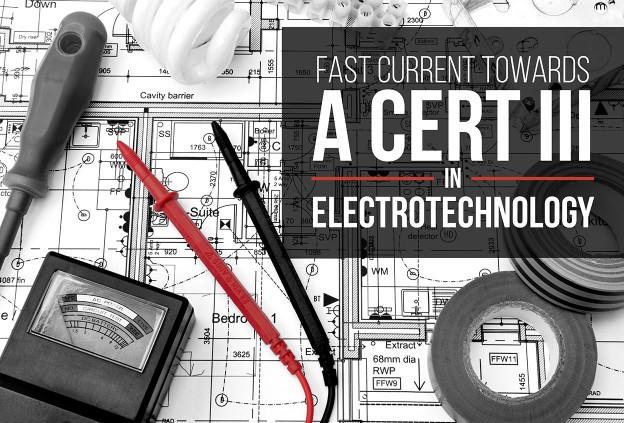
Fast Current Towards a Certificate III in Electrotechnology

Do you know how to assemble and set up basic security systems? Or how to install and maintain cabling for multiple access to telecommunication services? Do you develop and connect electrical control circuits? If these are tasks you regularly perform on the job, as an electrician, in refrigeration and air conditioning, in photovoltaics, or in telecommunications, you may already have the skills and knowledge to earn an impressive new qualification.

Whether you’ve learned your skills on the job, as a volunteer, or are even self-taught, that knowledge could earn you a Certificate III in Electrotechnology. Through Recognition of Prior Learning (RPL), what you know can earn you the qualification you need to get ahead through a simple process of skills recognition. No additional, long hours in classrooms. No expensive study fees. Simply collate evidence which proves that you know all the right stuff (that is, the qualification’s core and elective units of competency), fulfill all qualification requirements, and you could be on the pathway to success.

The Skills Recognition Process

Observe the core and elective units of your qualification. These are the units that you will have to prove your competency in. The aim is to map your evidence against each required unit.

You’ll do this by collating your resume, references, letters of recommendation, and photos and videos of your work. Don’t forget any workshops, seminars, or site competencies you have. If you hold any tickets, such as for forklifts, cranes, elevating work platforms or an electro-related ones, those are helpful as well. Everything will go into your portfolio, building the case for the award of your new credentials.

Scheduling a consultation, or completing a free online skills review is all that is required to get started. Skilled RPL Specialists will help you through the process, advising and directing your efforts. Examples of evidence might include:

• Photos or videos of your work
• Job descriptions
• Memos and letters
• References from supervisors
• Schedules
• Emails
• Performance reviews
• Training diaries
• Meeting minutes
• Samples of work
• Reviews of logbooks
• Forums/meetings/conferences
• References from employers
• Simulations of a work activity
• Role plays
• Team meeting notes
• Anything additional supporting document

Once a portfolio of documentation demonstrates that you can sufficiently perform the required tasks and duties (units of competency), the rest is easy. While the process maintains high standards of confidentiality, if the work you do is protected by Intellectual Property Rights or Trademarks, do check with your employer to ensure you are acting in accordance with the rules.

If you’ve been working with wiring, electronics, cables, and telecommunication equipment, you know these things. Likewise, if you’ve been working in air conditioning and refrigeration, photovoltaics energy systems, LV grids, substation maintenance and operation, or flow maintenance, it is time your valuable skills were given the attention they deserve.

Skills recognition and RPL services leading to hundreds of different qualifications have earned hard-working individuals like you exciting promotions, challenging new positions, and new careers. An easy, online inquiry gets things started, and within a few weeks, you might have already earned the qualification you’ve always wanted.

Electrotechnology is an exciting field with opportunities in construction, multinational corporations, and/or your own business. Recharge your career batteries with an RPL qualification today. It’s the easiest and fastest promotion you’ll ever receive.

RPLFoundation

Building a Future in Construction: The RPL Foundation

Putting in a full day in building and construction trades is hard work. The pay is usually pretty good, and becoming skilled in a trade such as carpentry, painting, tile setting, or plastering, is a reliable way to earn a paycheck. After a few years on the job, however, wouldn’t it be nice to see some progress as far as moving into a supervisory or management role?

If you have the ambition, the drive, and the expertise but not the degree on a piece of paper, and you think that a lack of education might be keeping you from achieving the position you want, we should talk. It is time for you to receive credit for what you know.

You’ve learned a lot on the job from peers, mentors and managers. You know how to run the machinery, order the supplies, and organize the crew. You arrive on time and stay till the job is finished, and you’re ready to take on more responsibility. If that describes your work history, the very first responsibility you should attend to is scheduling a consultation for an RPL assessment.

Recognition for Prior Learning (RPL) is an assessment pathway that reviews knowledge you’ve gained from all kinds of sources, turning it into academic credit for formal certification, like the Certificate IV in Building and Construction. It applies what you know toward a degree or qualification that can move you forward in your career. An RPL assessment will look at exploring all the ways you’ve learned things, from formal classroom education to non-formal and informal learning gleaned from life experiences.

If you’ve taken courses at work, or pursued a hobby with passion, the knowledge gained from the experience can be applied to appropriate certifications and qualifications, earning status, confidence, and perhaps even that promotion you’ve been seeking. If you’ve been performing tasks at home, remodeling a house, helping a friend build a new garage, or reading up on how to act as your own contractor, what you’ve learned may count toward meaningful credit, shortening the path to your certificate or diploma goal.

Licenses, work history, trade papers, and log books or job sheets can all help you to earn credit through trade recognition. So can tickets you hold, such as those enabling you to operate machinery such as forklifts, cranes, or graders. Matching your knowledge and skills with the learning outcomes of formal coursework in similar disciplines allows you to skip over the coursework. Eliminating that overlap can save both time and money, turning your knowledge into the education award of your dreams, faster and easier.

Start by collecting evidence of your experience, from industry awards, photos of your work, references from employers and managers, work history, and trade papers, as well as recognised courses. Make sure you consider every appropriate knowledge resource to get as much credit as you deserve. Then schedule a consultation with an RPL Specialist who will help you take the necessary steps to get your career in the building construction trades on the fast track, building a solid foundation for your future with RPL.

A wall gets built one brick at a time. Framing goes up one board at a time. Shingles go on one nail at a time. But when it comes to earning a building construction qualification, you don’t have to take it one course at a time. Skip what you know, and you’ll see how fast it goes, earning your credentials within the building and construction industries through trade recognition and RPL.

FastTrack_MBA

Using What You Know: The Fast-Track MBA

You’re a professional. You’ve learned the ropes, done the work, and know your stuff. You’ve got the ambition, the drive, and the skills that move winners forward. What’s missing?

If you just said your MBA, that’s about to change.

Going through a Master of Business Administration (MBA) program can be expensive and time consuming. It’s particularly challenging if you’re busy working, raising a family, or staying current in your field.

Traditionally, MBA programs span two years of coursework and cost tens of thousands of dollars. For many deserving souls, that simply isn’t a feasible option. But, what if there were a way to use what you already know, applying your expertise to a qualification to lighten the load? What if it could add those important letters after your name, quickly and efficiently? It might even earn status to meet requirements, ensure career advancement, and enhance job opportunities, without the financial and calendar pain.

Skills Recognition and Recognition for Prior Learning (RPL) are expertise assessment programs that do just that. They look at your experience and work to speed things up and cut costs. Through an assessment with an RPL specialist, your experience counts and your path to a 12-month MBA is plotted. It’s quick, and it’s easy.

Consider all the ways you’ve learned what you know. In school, your formal pathways provided a standard level of achievement. On the job, you have solved hundreds, perhaps even thousands of problems through innovation and experimentation, and taken training courses that prove your competency. In life, as a volunteer, or just tinkering around with a hobby, you’ve learned lessons no teacher could possibly have delivered so effectively. Gather all that up and you’ve got quite the portfolio.

What you’ve learned in life can be applied toward the qualifications and diplomas of your dreams. Arranging and running meetings, scheduling travel, managing employees, troubleshooting operations, using computers and machinery, creating documents with software, it all adds up to give you credit where it is due.

Arranging a consultation with an RPL Specialist initiates the assessment process, launching your MBA pursuit right into the appropriate level of learning. You won’t have to spend time taking basic level courses covering material that your expertise shows you’ve mastered. That means you won’t have to pay for them, either.

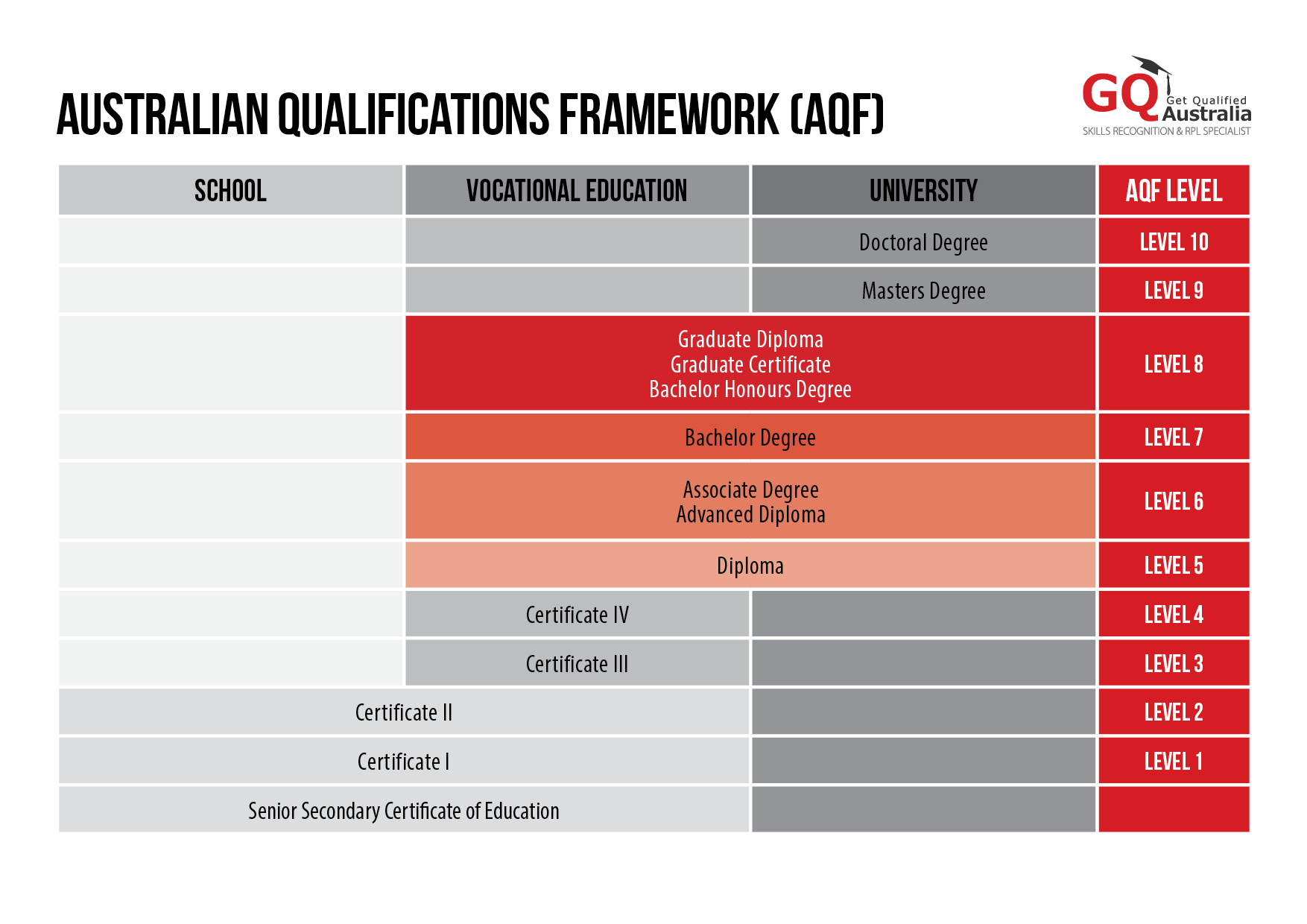
Even if you’ve not yet earned a Level 8 Graduate Diploma, that achievement is often quickly and easily accomplished through Skills Recognition. Once that’s completed, you’ll be able to take on a Level 9 MBA at half the time and cost, making that giant, satisfying leap forward.

Whether you seek a promotion in your current position, hope to apply for a more senior position requiring MBA status, need to fulfill visa or licensing requirements, or simply want to elevate your status, the fast track MBA through Skills Recognition and RPL offers advantages that will get you to your goal faster. Can you think of a single reason not to get started today?

AQF_Breakdown_V2

Get Qualified Australia’s University Pathways through the Australian Qualifications Framework (AQF)