


Monthly Archives: June 2015

AusHealthSector

Australian Health Sector: The Good, The Bad, and The Healthy

The world is becoming increasingly health conscious with the introduction of mandatory nutritional labeling, health initiatives within the community and workplace, policies and promotion.  And if a recent report by Roy Morgan is anything to go by, Australia has certainly jumped aboard the health-conscious train!

June is alive with the sound of “health”. Not only does 16-21 June mark the World Congress’ annual Men’s Health Week, but June is dedicated to raising awareness for Bowel Cancer in Australia. And it’s all with due cause.

Red Apple Day

GQ staff participating in Bowel Cancer Australia’s ‘Red Apple Day’ on 17 June.

The Roy Morgan Report has revealed some useful facts about Australian health and its implications for health sector practitioners, primarily with regards to opportunities within the field.

THE GOOD

The initiatives must be working!

The Australian Wellness Index reached a new peak in March 2015 after rising consecutively for 15 months. The key health areas that have signalled improvement include:

  1. Smoking health characterised by a decline in smoking rates over the last 2 years. This is the best performing health area.
  2. Nutrition Health marked by an improvement in nutrition.
  3. Alcohol health with a decrease in alcohol consumption.
  4. Activity health consisting of greater participation in physical and recreational activity.
  5. BMI Health characterised by a steadying of our National BMI.
  6. Medical Health subsisting of a declining incidence rate of severe and chronic illnesses.

THE BAD

While the overall health index has improved in 6 of the 7 key health areas, the National Psychological health score has suffered, experiencing an ongoing decline which started back in 2009.

Integrating a range of attitudes and occurrences of mental health issues, the score has revealed that young women aged 18-24 have experienced the greatest decline in psychological well-being driven by factors such as anxiety, depression, panic attacks, stress, demanding schedules and decreased optimism about the future. However, it is important to note that while younger females are subject to experience some form of mental turmoil, men aged 35-49 are more likely than their younger counterparts to undergo psychological health issues.

THE HEALTHY

Despite improvement in most key health areas, the decline in psychological health has opened up opportunities for practitioners within this sector. It will become increasingly important to counteract the drop in psychological health with a greater demand for mental health practitioners. This includes:

  • Mental Health workers

The threat of psychological well-being, particularly in areas of anxiety, depression and stress will encompass the combined effort of professionals who offer mental health support, primarily psychologists, mental health workers, nurses, general practitioners and social workers who provide mental health related support.

Vacancies for mental health work have increased by 10.11% in recent years, with the demand for Mental Health and Substance Abuse Social Workers being expected to rise with the addition of 44,130 new jobs between 2015-2018.

While most of the aforementioned professions require degrees, mental health workers can improve their career prospects with a Certificate IV in Mental Health or a Diploma of Community Services Work.

  • Youth workers

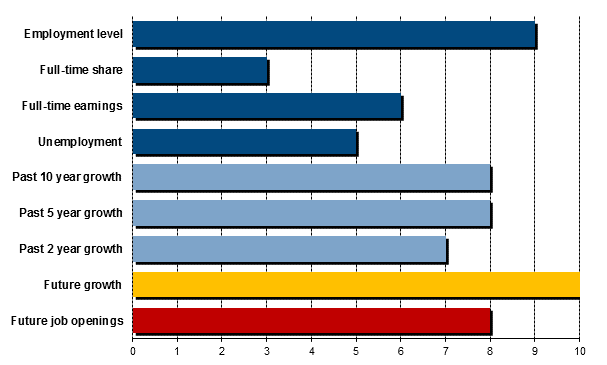
Affecting mainly young women aged 18-24, youth workers are also likely to experience a surge in demand, especially those working within educational institutions and community centers. The outlook for youth workers appears positive, with future employment growth being within the 10th decile, and expected level of future job openings above average (25,000 and 50,000 new jobs by 2018).
46531

While a youth worker is not required to hold a qualification to carry out their work, an increasing number of employers, especially government agencies, require an appropriate qualification for employment. Holding a Certificate IV in Youth Work or a Diploma of Community Services Work might improve your chances of employment, while filling employer demands.

  • Other opportunities in health

Although mental health is an area of key concern, it is not the only sector set to experience employment growth.  Other health professions with noteworthy projections include Medical Imaging Professionals (31.9%), Occupational Therapists (36.6%), Anesthetists (30.6%), and Nurse Managers (21.6%).

If you don’t already have a qualification but possess the experience, why not achieve one of the following qualifications to acquire a healthy dose of job opportunities.

Advanced Diploma of Nursing (Enrolled/Division 2 nursing)
Certificate IV in Allied Health Assistance
Certificate III in Allied Health Assistance
Certificate III in Health Services Assistance



MinTrainingCosts

Minimising training costs: The one thing every Manager should be offering their employees

You’re ready to travel to the other side of Australia. Bag loaded in the car, you turn on the ignition and begin the steady drive towards your destination. However, an hour and twenty minutes later, your car stops working. You try to restart the engine, but it chokes out in protest. Your eyes drift to the fuel gauge, and it is only then that you realise that your tank has run out of fuel.

The mechanics present in automobiles are comparable to the mechanisms present in Australian workplaces. Just like car systems, organisations have structures in place which allow them to operate smoothly. However, fail to supply them with the fuel required to get from points A to B, and your company is unlikely to reach its target destination.

Employee loyalty begins with employer loyalty. Your employees should know that if they do the job they were hired to do with a reasonable amount of competence and efficiency, you will support them.
– Harvey Mackay

It is common knowledge that employees are the lifeblood of a company, and as with any engine, you need to treat them with care. After all, an unhappy employee isn’t likely to muster the energy required to reach those end goals, much like a car without gas.

Many companies suffer from low employee motivation, reduced productivity and high staff turnover. However, what they fail to realise is that these are all symptoms of the same cause: a workplace which runs its employees on empty. Thankfully, there are ways to power-up your staff and give them the fuel required to boost motivation and productivity levels.

THE POWER FUEL: A CUSTOMISED TRAINING AND DEVELOPMENT PROGRAM

Implementing a training and development program, catered to the needs of each individual employee or department, can work miracles in boosting the motivational and production levels of your employees, if done correctly. There are many benefits to implementing a training and development strategy within your organisation, and you don’t necessarily have to spend maximum dollars to achieve maximum impact.

BENEFITS OF TRAINING & DEVELOPMENT – THE 4 DEGREES OF RPL

Recognition and Retention

Recognising an employee’s skills and efforts has a proven impact on boosting their levels of motivation, and subsequently, staff retention. After all, a happy employee is one who will stay, mature, and thrive with the company. Rewarding your employees with an accredited qualification or opportunities for personal and professional development is equally beneficial for both your company and employees, and can go far in encouraging productivity, commitment and long-term employment.

Recruitment

A high turnover rate is a clear sign of an organisations’ inability to adequately support its employees, thus limiting any progress towards achieving established goals, particularly when the cost of recruitment, replacement, and training is high. This is why thinking about what you have to offer both current and future employees is such a crucial step for any business.

Implementing an active training and development strategy, as well as qualifications within your remuneration package, will not only help you retain your current employees, but help attract a larger pool of potential candidates who have the required skills, but not necessarily the qualifications.

Regulation

To thrive as a company, it’s important to first ensure that your employees have all the required qualifications to work in your industry, particularly if it’s a heavily regulated one. Times have changed and qualifications are becoming more and more important within a growing number of industries. A training strategy developed through Recognition of Prior Learning (RPL) can help your employees adequately meet regulatory requirements by validating an employee’s competence in their appointed workplace position, without requiring any additional time off work. Using training packages developed by Industry Skills Councils, RPL can ascertain that your workforce sufficiently meets the accreditation requirements and training needs of your industry through the issuing of Nationally Recognised Qualifications and, where applicable, provision of quality gap training.

Redundancy

A company without motivated employees is unlikely to produce the fruits of success. While redundancy is a thing no business envisions for its employees, parting on good terms when such a situation proves unavoidable is of utmost importance to any business hoping to show it cares about its workers. Including Skills Recognition & RPL as part of your redundancy program can help you prepare your dismissed employees for future roles, while maintaining and improving employee morale amongst your remaining employees. It’s also a great way to reward them for their time and service.

DEVELOPING A CUSTOMISED TRAINING & DEVELOPMENT STRATEGY THROUGH RPL

Implementing a customised training and development strategy doesn’t have to be a cost and time extensive endeavour – you don’t have to spend it bigger to spend it smarter! There are a number of ways to successfully apply a training strategy within your business. Following Get Qualified Australia’s simple 5 step process, your staff could be fueled-up in no time.

1. Training Needs Analysis

Begin by identifying the training requirements across your entire organisation or within a particular department. Get Qualified Australia currently conducts a training needs analysis by measuring an employee’s existing skills against nationally recognised qualifications, ensuring that requirements are standardised for all staff.

2. Skills Assessment

A more thorough analysis of individual skill sets, the skills assessment requires employees to select elective units from an existing qualification. These skills are then weighed against industry training requirements, using the evidence of prior learning supplied. The assessment allows for a customised training and development program, relative to the individual learning needs of each employee. The best part is, you don’t need to spend a thing! Get Qualified Australia offers Free Skills Reviews for you to maximise on.

3. Knowledge gaps

Once complete, the skills assessment will identify whether there are any existing knowledge gaps, and whether gap training is required.

4. RPL and gap training

If staff meet all criteria, they can then be issued their qualification through RPL. If they fall short on a unit of competency, they can choose to undergo gap training either online or at home at their own pace

5. Qualification

Once eligible for RPL, the employee is issued a Nationally Recognised Qualification in line with industry standards.

————
Keep your workplace positive and your employees motivated. Power-up with a customised Training and Development Strategy. Download our ‘How To Train Smarter’ ebook for businesses.

Get Qualified Australia currently offers customised strategies for small to large business, completely catered to your business’ corporate and individual needs. Enquire today about getting a customised training and development strategy for your employees.

Are you an employee? Share this article with your Manager to reap the benefits of RPL.