

Category Archives: Career Development

RPL and Skills Recognition can be the solution towards career development. They will help individuals advance in their careers by acquiring the qualification needed to move to the next career stage

FitnessIndustry

5 Reasons to Work in the Fitness Industry

Do you love working out? Do you enjoy guiding others to live a healthy lifestyle? Do you hate sitting still? Perhaps it’s time to consider a job in the fitness industry. There are many reasons why people choose to pursue sport, recreation and fitness. Working in these fields requires energy and dedication. It may be tiring, and you may feel responsible for the success of others. However, the end result is always worth the hard work put in – whether it’s a footy team winning, a PT client feeling better than ever or a recreational rock climber reaching the top of his or her first climb. Here are the top five reasons for working in the fitness industry.

Helping people
Do you love helping people? Working in fitness will allow you to have a positive impact on the lives of others. You could be a sports coach who inspires a team and encourages a player to pursue his or her dreams, or the personal trainer who helps someone shed layers of weight. Nothing feels better than being generous with your time and helping someone else reach their full potential.

Motivating yourself
Working as a fitness professional will encourage you to always maintain a healthy lifestyle so you can keep up with your job and clients. Being fit and healthy will also ensure you give a great first impression to potential employers. It may even encourage your loved ones to join the gym or start eating healthier!

Active lifestyle
If you’re sick of being stuck at a desk all day, or live an active lifestyle already, working in fitness could be perfect for you. You will be constantly on your feet, doing something you love so much that the days pass by quickly. Though you may be tired at the end of the day, you will never feel sluggish at work and will be guaranteed to enjoy a heavy sleep each night after all the physical activity!

Run your own business
Many fitness professionals choose to run their own business. A personal trainer may have his/her own client base, or may run training sessions in public spaces. Social media has given way to a new era of fitness professionals reaching new heights via Instagram, Facebook, apps and downloadable guides. With a creative, smart idea and a good marketing strategy, you too could be on the fast track to success. Working in fitness, sports and recreation is what you make it, and you can make it anything you want it to be!

Flexibility
Running your own business or working on a casual basis ensures flexibility in your life. Earn money and enjoy your job while still having enough time to spend doing other things – like spending time with your family or pursuing other hobbies. Working casually or running your own business means you can adjust your schedule to best suit your lifestyle.

Jobs in the fitness industry are becoming increasingly popular, and unfortunately being physically healthy and strong isn’t going to guarantee you a position. Determine your eligibility for Skills Recognition with a quick, easy skills review and you could be achieving a Nationally Recognised Qualification within weeks.


9Steps_To_Promotion

9 Ways to Land a Promotion

Climbing the ladder and working all the way up to the top is something many

individuals visualise when they begin their career. However, with so much talent

in the workforce, it can be a challenge to prove you deserve a promotion more

than the person sitting next to you. Want a better chance of coming out on top?

Use these handy tips to kick-start your career progression.


Be drama free

Nobody likes a drama king or queen in the office. Earn a promotion by being a

team player. Don’t complain about your co-workers and their annoying habits. If

something is seriously wrong (like you feel threatened), take it to the boss and

avoid getting involved in the drama. You need to provide positive results, not

unnecessary issues.


Smile

Happy face, happy work place! You may be feeling tired or stressed, but

continuing to smile will not only boost your mood, but also the moods of those

around you. A better mood equals better productivity and better work.


More notes, less repetition

The majority of bosses report feeling irritated when they are asked the same

question over and over again. Although they’re happy to explain things once or

twice, especially if you’re new, after a while you will be expected to be able to fly

solo. When you’re learning new information, take notes. That way you will

always have access to the answers you need, whenever you need them.


Keep your promises

Being a valuable member of the team means keeping your promises. If you tell

your boss you will have a report done by 5pm, have it done. If you promise to

teach your co-worker a new skill, follow through. This will show how reliable

you are and increase the likelihood that your boss will trust you with the added

responsibility of a promotion.


Offer help

Giving a helping hand will show your generous spirit and value in the workplace.

If someone in your team is working overtime, offer to help them get it done

faster. If there’s a storm and someone is catching the bus or train home, offer a

lift. Even simply offering to do a coffee run will show that you care about the

welfare of the team.


Know your job

What better way to impress than to know your job inside out? You should know

your responsibilities, execute tasks with expertise and be able to explain what

you are doing and the reasons behind it.


Don’t expect a reward

The worst thing that you can do is assume that for every good deed or excellent

piece of work you produce, you will be rewarded. Bosses expect you to work

hard because you are passionate about the cause and the company, not because

you are vying for a promotion or pat on the back. If you act without expectation,

you are more likely to receive positive feedback and support from your co-

workers and employer.


Challenge the head honcho

Although it’s best not to constantly disagree and argue with your boss (especially

when they have far more experience), at times it can be helpful to challenge their

point of view and provide a new idea or perspective.


Don’t stop learning

Adding new skills to your resume and using them in your work will boost your

chances of receiving a promotion. Not only will the quality of your work increase

and spectrum of your experience widen, but you will also demonstrate to your

employer that you believe in self-improvement. If you believe you already have

all the skills and prior learning you need, make it official. Get Qualified Australia

is dedicated to helping individuals validate their skills and experience. Have

yourself assessed and be amazed at how many qualifications you are eligible to

claim.


Scoring a promotion isn’t meant to be easy. Bosses will reward those who they

think have earned more responsibility and deserve a new role. Producing great

work, being a friendly presence in the office and a reliable member of the team

will all put you on the path to a promotion.

FastTrack_MBA

How to save time and money fast-tracking your MBA

If you’re a professional with enough ambition, drive and managerial experience to move into an executive role, then converting your experience through RPL might be the perfect way to save time and money achieving your MBA.

Completing a Master’s Degree, primarily a Master of Business Administration (MBA) while engaging in full-time work and raising a family may seem like an implausible feat for many. Amid the endless number of tasks there are to be completed at both home and work, the likelihood of cramming two years’ worth of study and travel time into your current schedule, may seem altogether unlikely.

And that’s not even the extent of it, considering the current cost of getting an MBA which is likely to set you back at least $30,000 over the course of the two year program.

In an ideal world, the cost of achieving an MBA to move into an executive role would be miniscule. In an even more ideal world, you wouldn’t be forced to put your life on hold due to the excessive workload and travel time involved.

While we may not be living in a perfect world, there are avenues that can help you save time and money achieving your MBA, at half the time and cost.

RECOGNITION OF PRIOR LEARNING (RPL)

Introduced in the 1990s, Recognition of Prior Learning (RPL) allows skilled Australians to attain a Nationally Recognised Qualification using their existing skills, knowledge and experience. This means that rather than undergoing countless hours of classroom study, individuals can use their existing knowledge to attain a qualification, without ever having to step foot inside a classroom.

RPL has made it easier than ever for professionals with managerial experience to get their skills recognised through the attainment of a Graduate Diploma of Strategic Leadership. Rather than having to engage in any study, these professionals can attain their nationally recognised qualification solely by providing evidence of their skills and experience in the units listed below.

GRADUATE DIPLOMA OF STRATEGIC LEADERSHIP

CORE UNITS

BSBLDR801 Lead personal and strategic transformation
BSBLDR802 Lead the strategic planning process for an enterprise

ELECTIVE UNITS (SELECT 6 ONLY)

BSBFIM801 Manage financial resources
BSBLDR803 Develop and cultivate collaborative partnerships and relationships
BSBLDR804 Influence and shape diversity management
BSBLDR805 Lead and influence change
BSBLDR806 Lead and influence ethical practice
BSBMGT801 Direct the development of a knowledge management strategy for a business
BSBMGT802 Lead design and review of enterprise systems
BSBMGT803 Use financial and economic information for strategic decision making
BSBRES801 Initiate and lead applied research


HOW TO FAST TRACK YOUR MBA WITH A GRADUATE DIPLOMA OF STRATEGIC LEADERSHIP

Because the units of the above qualification are comparable to those of the MBA, completing skills recognition for a Graduate Diploma of Strategic Leadership can help you receive up to 6 credit exemptions for an MBA from a university of your choice. This means that you can walk away with two different qualifications, while saving up to $15,000 and 1 year of study. The process couldn’t be simpler.

THE FAST-TRACKED MBA PROCESS

  1. Free Skills Review

Confirm your eligibility by conducting a simple 2-3 minute Free Skills Review.

  1. Eligible?Get Started!

If you’re eligible, Get Qualified Australia’s Skills Recognition & RPL Specialists will send you a number of documents to get started.

  1. Self-assessment

You’ll begin with a simple self-assessment checklist, analysing your existing skills sets, knowledge and experience.

  1. Submit Evidence

Next, you’ll gather your supporting evidence.

  1. Evidence Assessed

Once your evidence is received, Get Qualified Australia will take care of the hard work by organising and compiling your evidence in line with the units of the Graduate Diploma.

  1. Gap training (IF APPLICABLE)

If you fall short on a unit of competency, you can choose to undergo gap training either online or at home to complete the required units. This may be done in your own time and at your own pace.

  1. Approved? Get Qualified!

The RPL Process is now complete, provided you meet the requirements of each unit. You’ll be issued your Nationally Recognised Postgraduate Qualification from an RTO partner.

  1. Apply for credit exemptions

You’re now set to seek maximum credit exemptions from a university of your choice. Simply match the units from your qualification with those of the MBA.

IS FAST-TRACKING THE MBA RIGHT FOR ME?

Choosing to fast-track your MBA is ideal if you’ve always wanted to do your MBA but have been unable to complete it due to:

  • Family Commitments
  • Work commitments
  • Business travel
  • Heavy workload

It’s also ideal if you’d like to achieve professional development, sit in the executive chair, attain a pay rise or promotion, and avoid repetition of already gained skills, knowledge, training and experience.

Think you have what it takes?

Take our free skills review today to see if you can save time and money achieving your MBA through RPL.

TopEarningTrades2015

Top Earning Trades in 2015!


Increase your earnings in 2015 through RPL & Skills Recognition

Australia is one of the most expensive countries to live in. Scratch that – Australia is the most expensive country to live in, having been ranked as such for the fourth year in a row by the Deutsche Bank in their annual Mapping the World’s Prices report. In fact, only 4 cities are more expensive than Sydney in terms of cost of living.

Yes, that’s right. Australia’s bucks are bringing in the least bang.

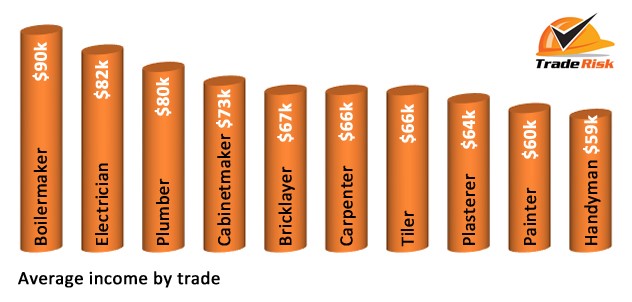
With high transport and accommodation costs, achieving a high paying job is important for Australia’s working population, including its blue collar workers. While it’s difficult to pinpoint the exact amount Australian tradesmen earn, as this differs between trades and the structure of employment (i.e. sole trader, contractor or sub-contractor), Trade Risk have pooled together their resources to highlight the top earning trades in 2015, as based on average income.


THE CHAMPIONS OF 2015

tr
(Graphic by Trade Risk)

Taking the top three spots, boilermakers, electricians and plumbers have topped off the list for the second time in a row. However while these tradies are earning the biggest bucks, it’s the cabinetmakers, bricklayers and painters who have experienced the highest increase in average income, with a 10% rise in earnings.

What’s more, the average income for tradies has increased from $68,900 in 2014 to $70,500 in 2015.


DEDUCING THE FACTS: HOW TO INCREASE YOUR EARNINGS IN 2015 AND BEYOND

If one were to gather anything from these findings, it would be that our Aussie tradies have a world of opportunities to earn bigger dollars in 2015. We’ve identified two strategies that tradies could implement to bring in a bigger return in the year ahead – moving to a higher earning trade, and converting their existing skills to a qualification.


Upping Your Trade

In their time, many tradies have worked across dual or multiple trades, successfully acquiring a range of different skill sets through hands-on experience. Rather than being limited to one trade, they have directed their efforts towards learning the features of each trade, and effectively transferred these expert skills between them.

Making the move to a higher earning occupation in which the tradie is qualified, could open up new opportunities for the tradie to earn more money. Take John Cheakery for example.

After working as a carpenter for fifteen years, and applying his woodwork skills on large structural projects like housing frames and decking, John became interested in concentrating his efforts on more intricate constructions and trim carpentry. Sharpening his skills, this more concentrated focus on finer details led John to complete a large number of internal fitting jobs, creating tables, kitchens and cabinets over the course of six years. Shifting his efforts to cabinet making, John decided to cross-over into this specialised trade, upping his annual earnings in 2015 by a whopping $8,210.


Qualifying Your Trade

In view of the above scenario, should John have acquired all the necessary skills to work as a cabinetmaker in Australia over the course of his 21 years of experience, he would be eligible for a Certificate III in Cabinetmaking.

In addition to his increased earnings, the process of having his skills, knowledge and experience qualified through skills recognition or RPL would not only give John the minimum requirement to achieve trade recognition for Cabinetmaking in Australia, but also help him secure future jobs, roles and promotions, thus increasing his earning potential.

Qualifying your skills, knowledge and experience, especially if you’re competent in all industry units and have the required experience, is a great way of boosting your salary and job prospects as a formally recognised tradesperson. Find out if you can achieve formal trade recognition through RPL with this simple 2-3 minute free skills review.

Remember, it’s never too difficult or late to increase your earning potential. Moving to a higher earning trade or qualifying your skills through Skills Recognition or RPL are only two of the possible ways to go about this in an effective manner. The opportunities , however, are endless. 

Source: https://www.traderisk.com.au/

LeadershipStyle

What’s your leadership style?

CantWorkAnymore

Can’t work anymore? The trick to staying employed.

Sometimes life happens.

Perhaps you’ve sustained an injury that has rendered you incapable of performing your current duties. Perhaps your physical capacity for executing tasks is no longer enough to get the job done. Age may have taken its toll on you and, in effect, slowed down work you were once able to do with the flick of a switch. Maybe you’re simply nearing the end of your career, and are struggling to find employment opportunities, but would love to help someone begin theirs.

You might no longer be cut out for the work you were once able to do, but this doesn’t mean that you are no longer cut for work, especially within your industry. All you need to do is relocate your efforts in a different but related lot, and all it takes is one simple, yet valuable qualification.

Staying employed in your industry with a qualification in Training & Assessment

You’ve probably worked so long in your industry that you know it like the back of your hand. If this is the case, then teaching others the skills you’ve already acquired, whilst also assessing skill sets and levels of proficiency, might be a viable option if you’re looking to stay employed within your industry, albeit in a different capacity. You could become a vocational education teacher; training adviser or training needs analyst; or an enterprise or RTO trainer and/or assessor. Each of these can help ensure that you continue to work within your industry, even whilst no longer able to physically perform the work.

Sound good? It really is, and you could be using it for work within any vocational education and training (VET) industry.

How?

To be able to deliver training and assessment services in the VET sector, you’ll need a few things first.

  1. A Certificate IV in Training & Assessment would come in handy, and by handy we mean it’s a requirement as per Standard 1 in the Australian Quality Training Framework’s Essential Standards for Registration. This qualification is also great if you’re already engaged in the delivery of training and assessment of competence in the workplace, as part of a structured VET program.
  2. The above qualification is not for everyone, and in order to be considered eligible, you must be able to pass certain units of competence. Amongst others, these include:
  • Planning assessment activities and processes as well as assessing competence
  • Participating in assessment validation
  • Planning, organising and facilitating group-based learning, particularly in the workplace
  • Designing and developing learning programs
  • Using training packages and accredited courses to meet client needs.

To find out if you’re eligible for a training and assessment qualification, take this quick 2-3 minute Free Skills Review, or match your skills against the full competency requirements.

  1. You’ll also require evidence of the above units of competency. This can take the form of:
  • Resume/CV
  • References
  • Performance appraisal
  • Portfolio/work samples
  • Photographic and videoevidence
  • Education, training and qualifications
  • Job Description
  • Policies and procedures
  • Workplace communication
  • Bookkeeping and financial records

Perhaps you’re a little more advanced and looking for that little, something extra. If that’s the case, then you might be able to try your skills at the Diploma of Vocational Education and Training or Diploma of Training Design and Development.

Get ready, get set, teach!  

Once you’ve acquired your qualification, you’re all set to make the transition from employee to trainer, developer and/or assessor within your current industry. It’ll ensure that you’re still able to work within the industry you’ve dedicated your entire life to, while making use of your existing skill sets and experience. It’s the perfect way to hold onto the past by remaining employable in the present, and well into the future.

Get your Certificate IV in Training and Assessment using only your existing skills, knowledge and experience with Australia’s leading Skills Recognition & RPL Specialist, Get Qualified Australia. Enquire today on 133 775.

10622786_794129727334007_8392292900744453194_n

AusHealthSector

Australian Health Sector: The Good, The Bad, and The Healthy

The world is becoming increasingly health conscious with the introduction of mandatory nutritional labeling, health initiatives within the community and workplace, policies and promotion.  And if a recent report by Roy Morgan is anything to go by, Australia has certainly jumped aboard the health-conscious train!

June is alive with the sound of “health”. Not only does 16-21 June mark the World Congress’ annual Men’s Health Week, but June is dedicated to raising awareness for Bowel Cancer in Australia. And it’s all with due cause.

Red Apple Day

GQ staff participating in Bowel Cancer Australia’s ‘Red Apple Day’ on 17 June.

The Roy Morgan Report has revealed some useful facts about Australian health and its implications for health sector practitioners, primarily with regards to opportunities within the field.

THE GOOD

The initiatives must be working!

The Australian Wellness Index reached a new peak in March 2015 after rising consecutively for 15 months. The key health areas that have signalled improvement include:

  1. Smoking health characterised by a decline in smoking rates over the last 2 years. This is the best performing health area.
  2. Nutrition Health marked by an improvement in nutrition.
  3. Alcohol health with a decrease in alcohol consumption.
  4. Activity health consisting of greater participation in physical and recreational activity.
  5. BMI Health characterised by a steadying of our National BMI.
  6. Medical Health subsisting of a declining incidence rate of severe and chronic illnesses.

THE BAD

While the overall health index has improved in 6 of the 7 key health areas, the National Psychological health score has suffered, experiencing an ongoing decline which started back in 2009.

Integrating a range of attitudes and occurrences of mental health issues, the score has revealed that young women aged 18-24 have experienced the greatest decline in psychological well-being driven by factors such as anxiety, depression, panic attacks, stress, demanding schedules and decreased optimism about the future. However, it is important to note that while younger females are subject to experience some form of mental turmoil, men aged 35-49 are more likely than their younger counterparts to undergo psychological health issues.

THE HEALTHY

Despite improvement in most key health areas, the decline in psychological health has opened up opportunities for practitioners within this sector. It will become increasingly important to counteract the drop in psychological health with a greater demand for mental health practitioners. This includes:

  • Mental Health workers

The threat of psychological well-being, particularly in areas of anxiety, depression and stress will encompass the combined effort of professionals who offer mental health support, primarily psychologists, mental health workers, nurses, general practitioners and social workers who provide mental health related support.

Vacancies for mental health work have increased by 10.11% in recent years, with the demand for Mental Health and Substance Abuse Social Workers being expected to rise with the addition of 44,130 new jobs between 2015-2018.

While most of the aforementioned professions require degrees, mental health workers can improve their career prospects with a Certificate IV in Mental Health or a Diploma of Community Services Work.

  • Youth workers

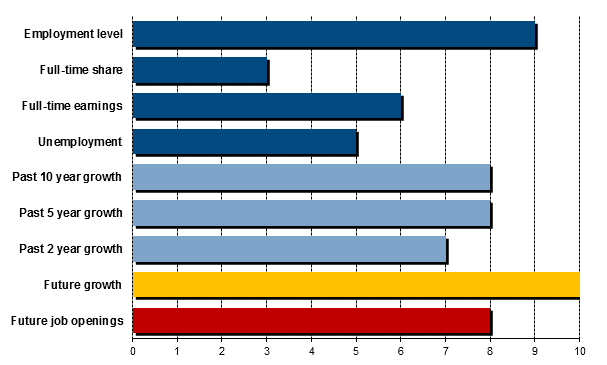
Affecting mainly young women aged 18-24, youth workers are also likely to experience a surge in demand, especially those working within educational institutions and community centers. The outlook for youth workers appears positive, with future employment growth being within the 10th decile, and expected level of future job openings above average (25,000 and 50,000 new jobs by 2018).

46531

While a youth worker is not required to hold a qualification to carry out their work, an increasing number of employers, especially government agencies, require an appropriate qualification for employment. Holding a Certificate IV in Youth Work or a Diploma of Community Services Work might improve your chances of employment, while filling employer demands.

  • Other opportunities in health

Although mental health is an area of key concern, it is not the only sector set to experience employment growth.  Other health professions with noteworthy projections include Medical Imaging Professionals (31.9%), Occupational Therapists (36.6%), Anesthetists (30.6%), and Nurse Managers (21.6%).

If you don’t already have a qualification but possess the experience, why not achieve one of the following qualifications to acquire a healthy dose of job opportunities.

Advanced Diploma of Nursing (Enrolled/Division 2 nursing)
Certificate IV in Allied Health Assistance
Certificate III in Allied Health Assistance
Certificate III in Health Services Assistance


ConstructEfforts

Where to construct your efforts in 2015: Employment outlook for the Building and Construction industry

“You cannot build a dream on a foundation of sand.”

― T.F. Hodge

The future of Australia’s construction industry may seem doom and gloom amid mining fall-backs, declining investment levels, and rising pressures on resource-related project activity, however calamity is not upon us. Knowing where to invest your employment efforts, and in which sector more precisely, is key to maintaining and increasing your job prospects within the building and construction industry in 2015.

THE BLOOMING LOT: RESIDENTIAL CONSTRUCTION

The value of residential building work is set to rise from $46.2 billion in 2012/13 to 60.9 billion in 2015/16. Of the 183,000 projects expected during this period, the apartment building sector is likely to witness the highest level of growth, with a 6.3% increase in projects.

THE SECURE LOT: COMMERCIAL CONSTRUCTION

Rising at a rate of 3.2%, sustained growth is anticipated within the commercial construction industry. Majority of this growth is expected to occur through private building efforts, including offices, retail premises, and recreational buildings.

THE PROMISING LOT: INFRASTRUCTURE CONSTRUCTION

Despite experiencing declining activity in electricity, sewerage, drainage, water supply, and pipelines, the future for infrastructure construction looks favourable, with an expected growth rate of 5%. Following an increase in investment, primarily from the NBN network, the telecommunications sector seems most hopeful (8.2%), while the Federal and State infrastructure plans for road and rail are expected to witness a revenue lift by 6%. This is followed closely behind by civil projects (5.2%), including port expansion.

THE STATE OF DEVELOPMENT

If you’re a job seeker looking to invest your efforts in solid soil, then knowing where all the activity is happening proves crucial. Fortunately for New South Wales natives, their resident state will be home to a large portion of building and construction activity. This is followed moderately by South East Queensland, and Victoria, and understandably so. States not as exposed to declining mining-related construction, such as NSW and VIC, have greater opportunities.

THE EMPLOYMENT LOT: JOB OUTLOOK FOR 2015

As one of the 16 industries expected to experience increased job offerings between 2015 and 2018, employment within the construction industry is set to grow by 137,900 jobs (13%). While outlooks for heavy and civil engineering construction are projected to suffer marginally, small home builders and occupations with greater exposure to the detached housing and apartment buildings sector, such as bricklaying, plastering, tiling, residential landscaping, and site management, appear to have the most to gain. Of these sectors, the greatest opportunities exist for off-site and sub-contract work.

HOW TO INCREASE YOUR EMPLOYMENT PROSPECTS IN 2015

1. Invest in the booming sectors

There’s no logic behind placing structures in sinking soil. Instead, you should focus your labour on burgeoning sectors. These include residential (apartment buildings), commercial (offices, retail, recreational buildings), and infrastructure construction (telecommunications, road and rail, and civil) industries.

2. Consider off-site and subcontract work

With demand for off-site and subcontract tradesmen eclipsing that of on-site work, it seems more beneficial to take on jobs under these arrangements. While such agreements may not work for you, they might be worth looking into.

3. Up your qualifications and get your trades license

It’s a tough and competitive world out there, and to secure a lot for future employment, you need a solid foundation on which to build. Having all the required qualifications and trades licenses to meet industry requirements and one-up your competition, can increase your chances of getting a job substantially, especially if you’ve got a superior line of skills locked in your tool-kit.
If you can’t afford to take any time off work, then you’ll be happy to know that you no longer have to. Recognition of Prior Learning (RPL) has made it easier than ever to turn your existing skills, knowledge and experience into Nationally Recognised Qualifications which may then be used to acquire your trades license. For more information about licensing requirements, click here.

If you’ve already got a qualification, it might be useful to consider merging into a more burgeoning sector of your industry by obtaining a qualification within that area too, especially if you’ve already got all the skills required to prove your competence. The following qualifications might help you increase your chances of landing a job in 2015.

Diploma Of Building And Construction (Building)
Certificate IV In Building And Construction (Site Management)
Certificate IV In Building And Construction (Building)
Certificate III in Bricklaying
Certificate III in Solid Plastering
Certificate III in Wall and Floor Tiling

SOURCE:
Australian Industry Group, 2014, Construction Outlook

Still-fit-for-work

Still fit for work? How to stay in employable shape with age!

Walk, run or jog all you want, sometimes it seems as though the “youngsters” are getting the upper hand in most things these days. Not only have their faces not yet experienced the harsh realities of wrinkledom, but it’s starting to seem like they are better equipped than most to land the majority of jobs available within the Australian labour market, especially with the recent rise in technological developments which have demanded the acquisition of new work skills.

Being an older worker in a constantly evolving workforce is never easy, but never has it seemed as imperative as now to pump up those skills and increase one’s employability. The growing pressure of the aging population on economic growth has extended the participation age of older Australians, with the latest Treasury Intergeneration Report pointing to an increase in the eligibility age for the means-tested age pension from 65 to 67.

Yet despite pushing for longer workforce attachment, current workforce trends appear to be anything but “age friendly”. Work intensification strategies characterised by excessive hours, unrealistic benchmarks, family unfriendly arrangements, and high levels of competitiveness are slowly emerging, and such conditions are set to hinder the ability of workers to maintain employment well into their late 60s.

This is particularly true for older Australians who have expressed having a harder time regaining jobs once they are lost, with the average duration of unemployment for Australians aged 45 years and over being 62 weeks, compared to the 34 weeks for Aussies under 45, and 24 weeks for those under 25.

While workers higher up the hierarchical ladder are more likely to experience employment stability, those either lower down the company chain or currently in unemployment, are most likely to undergo difficulty in getting a job. If workers are to remain employable well into their 60s, then it is crucial they apply strategies which will make them more job-fit than their younger-gen competitors.

How to stay job fit and outweigh younger job-hunters

1. Keep up with your industry

They often say that knowledge is power, and to keep up with the various changes happening in your industry, you need to stay informed. Be sure to monitor developments, such as technological and regulatory advances, and identify any new skills required to efficiently perform your daily tasks.

It might be the case that your industry requires qualifications which weren’t a prerequisite back when you first got your foot in the door. To rise above younger generations already equipped with the required licenses and qualifications, add a qualification to your trophy stand, and situate it right beside your experience.

If you feel that you simply don’t have the time or energy to take on board new study, there are always other options available like Recognition of Prior Learning (RPL) which allows you to trade in your existing skills and experience for a qualification.

2. Take time to build yourself and your capabilities

With ongoing developments, you need to take the time to improve and build upon your capabilities. Start by exploring your options, understanding your current value, identifying where you want to be, and then determining what gaps exist between the role you are currently in or hope to attain, and your existing skill sets.

Having your skills assessed against industry benchmarks might be a useful way of highlighting these shortcomings, and can often be done in a highly cost-effective manner. A Free Skills Review is a useful tool for efficiently identifying the skills, knowledge and experience you currently have, and those which you might need to attain to stay abreast with your industry.

3. Have a strong social media presence

As it stands, your digital footprint is starting to become just as important as your physical one. With more than half of all Australians using Facebook and LinkedIn, social media has transformed the way companies operate their recruitment endeavours. Of all these, LinkedIn has emerged as the dominant favourite for recruiters and job seekers alike, followed by Facebook.

In response, professional networks such as LinkedIn are becoming instrumental catalysts in bringing about a new era of recruitment that is optimised for both employer and employee. This makes having a strong social media presence of prime importance so as to effectively cater to the ongoing technological changes that give you that competitive advantage over your competitors. Learn more about optimising your social media resume here.

Always remember that you are never too old to do what you love. Learn to adapt to current workforce trends and industry requirements so as to either keep your job, obtain a new one, or simply remain in tip-top employable shape for years to come.

Social media might be an alternative to the more traditional resume form, however knowing how to apply the correct principles to the non-social counterpart, can go a long way in making your job application stand out, and help you score that interview you’ve been waiting for.

THE JOB SCORING FORMULA: KNOW WHAT TO DO

As with all efforts, you want your resume to:

a) Be selected by the hiring manager for an interview, and
b) Deliver a captivating image of who you are, whilst highlighting your professional value to the company in an honest and compelling way.

To do this, it’s useful to apply the following principles of effective resume writing.

1. DO tailor your resume

There is nothing worse than sending out a resume that is not catered to essential criteria. The hiring manager wants to know how you’ll be able to help the company grow by applying the skills necessary to carry out tasks, so make sure that your resume is targeted to the position you seek. Carefully observe criteria. If the role requires certain skills and qualifications, then make sure that you’re a good fit and that your resume is a good reflection of this.

2. DO make your skills shine

It’s always important to have the right skill sets to work in your industry, and knowing how to highlight these within your resume can either make or break your chances of being considered for an interview. Begin by examining the job criteria, and then tailoring each of your specialities accordingly. When delving into your skills, state what each one is, and then proceed by providing examples which demonstrate your application of the skill, and evaluating your performance. Conducting an inventory of your skills is never easy, but there are useful tools available which can ease the process. A Free Skills Review might be beneficial to help you evaluate your more functional skills, whilst determining your suitability for your career.

3. DO give your qualifications prime space

Your qualifications are the first indication of the skills and achievements that you possess. Simply stating your skills will have no effect, if you don’t have qualifications with which to underpin your claims, so give them prime space within your resume to increase your chances of being considered for an interview.

You’d be surprised by how many qualifications you’re actually eligible for, and just how great of an effect upping your qualifications at the Certificate, Diploma and/or Advanced Diploma levels can have on giving your career ultimate boost. Skills Recognition and Recognition of Prior Learning (RPL) have made it possible for people to use their existing skills, knowledge and experience to receive qualifications in as little as weeks. This means you could be upping your qualifications from the comfort of your home or office without undertaking any courses or classroom study, and all in time for that job.

4. DO use data and examples to illustrate your points

Using examples which quantify the impact you had on a company, illustrate your skills and experience by proving there is sizzle to the steak. Any accomplishment can be quantified, and using bullet points, facts and figures can help you demonstrate your skills more successfully.

5. DO pay attention to design

If you thought your content was the only thing warranting attention, then think again. You should be paying just as much attention to design. After all, if your words are not properly structured, there is little chance the hiring manager will give the content a second, interview-scoring glance. For most creative industries, a portfolio-based resume is the standard, however even professional resumes need to follow some simple guidelines, such as using bullet points and horizontal lines to separate different sections of your resume. A carefully thought out arrangement is better than an unstructured mess!

THE JOB SCORING FORMULA: KNOW WHAT NOT TO DO

1. DON’T make things up.

Remember, honesty is the best policy. It’s one thing to demonstrate that you are a good fit by tailoring your resume to job criteria, but it’s another thing entirely to make false claims, such as possessing qualities you don’t have. The truth always has a habit of coming out.

If you find yourself lacking the skills required to take on a new job, and are looking to increase your job performance, begin by updating your knowledge bank.
Consider taking your current and more functional skill sets, and giving them the ‘training treatment’. This can be achieved by attending seminars, workshops, undergoing workplace training or taking an online course. Various Registered Training Organisations in Australia offer simple, yet effective courses that can help reinvigorate your career and improve your skills. If you’re in the Business and Management industry, Get Qualified Australia Institute has some useful courses which can help you brush up on your business skills.

2. DON’T include outdated or irrelevant experience

Nothing will set you below the interview-consideration line like outdated experience irrelevant to the role you’re applying for. Give your recent experience the most weight, and only include positions which demonstrates your suitability to the role. While it’s useful to include volunteer experience in your resume, it’s hardly likely that employers will be swayed by that check-out role you held 15 years ago at a local supermarket, if you’re applying for a nursing position. It doesn’t demonstrate your suitability to the role at hand.

3. DON’T fall victim to information overload.

Your resume is not an autobiography – it’s your personal ad. To sell yourself as effectively as possible, you need to consider the quality of your words above their quantity. Remove fluff and make every word count, giving each bullet point no more than one to two lines of text. Focus on your key accomplishments and address the company’s needs. Also avoid using personal pronouns such as “I” or “my”. The Hiring Manager doesn’t care about your life story. He or she cares about your professional worth.

4. DON’T provide personal data

Personal data, such as your marital status, gender, age, religion and other non-work-related data can be incorrectly, and at time unconsciously, used to discriminate against applicants. Avoid placing this information in your resume, especially when it does not add anything of value.

Apply this job-winning, interview-scoring formula and watch your career prospects grow!