Category Archives: RPL

Blogging about RPL – what is happening – what is new there. Recognition of Prior Learning is endorsed by the Australian government

CHAFTA

(Infographic) ChAFTA: How to Improve your Employment Prospects

Note: Please note that Get Qualified Australia is neither involved in nor endorses the China-Australia Free Trade Agreement. As Australia’s leading Skills Recognition & RPL Specialist, it seeks to improve the employment prospects of Australian workers through skills recognition services and the issuing of Nationally Recognised Qualifications.

The China-Australia Free Trade Agreement (ChAFTA) has caused much controversy since being signed in June 2015, particularly within industries directly affected by the Agreement. However, despite the apparent backlash, it is important to consider whether the Agreement really poses as great a risk to Australian jobs and workplace safety as presumed, or whether there are ways to bypass and limit the potential negative repercussions the Agreement may have on the above factors, by working it to the advantage of Australian workers.

Want to know more about ChAFTA and how to improve your employment prospects? Read more here.

ChAFTA_Agreement_Infographic (4)

CHAFTA

ChAFTA: Facts and How to Improve your Employment Prospects

Note: Please note that Get Qualified Australia is neither involved in nor endorses the China-Australia Free Trade Agreement. As Australia’s leading Skills Recognition & RPL Specialist, it seeks to improve the employment prospects of Australian workers through skills recognition services and the issuing of Nationally Recognised Qualifications.

View the China-Australia Free Trade Agreement Infographic here.

The China-Australia Free Trade Agreement (ChAFTA) has caused much controversy since being signed in June 2015, particularly within industries directly affected by the Agreement. However, despite the apparent backlash, it is important to consider whether the Agreement really poses as great a risk to Australian jobs and workplace safety as presumed, or whether there are ways to bypass and limit the potential negative repercussions the Agreement may have on the above factors, by working it to the advantage of Australian workers.

To grasp this concept better, it is important to first look at the implications of the Agreement.

At the heart of ChAFTA lies the streamlining of relevant skills assessment processes for temporary skilled labour visas, including a reduction of the number of occupations currently subject to mandatory skills assessment.

This means that Chinese workers looking to apply for an Australian Temporary Work (Skilled) 457 visa, will not be subject to mandatory skills assessment for ten prescribed occupations. These occupations include:

Automotive Electrician [321111]

Cabinetmaker [394111]

Carpenter [331212]

Carpenter and Joiner [331211]

Diesel Motor Mechanic [321212]

Electrician (General) [341111]

Electrician (Special Class) [341112]

Joiner [331213]

Motor Mechanic (General) [321211]

Motorcycle Mechanic [321213]

The removal of assessment practices leaves many questions for Australian tradies, predominantly:

- What safety measures will ensure that Aussie workers have access to job opportunities in Australia?
- What safeguards will ensure that safety standards in Australian workplaces are maintained?

In order to be able to answer these questions, one must first ponder the facts.

Fact 1) Shortage of skilled and qualified labour
Under the Agreement, a Chinese company investing more than $150 million in Australian infrastructure projects must use Australian workers unless the company can prove that there are no existing qualified Australian workers to do the job.

This means that Chinese workers may only be considered for job purposes if there is a shortage of skilled and qualified Australian workers for any given task. Even so, the company or investor may only bring in a limited number of qualified overseas workers who possess the specific skill sets required for the job, and only for a limited period of time when suitable local workers cannot be found.

Summary Points:

– Skilled and qualified Australian workers given job priority
– Chinese workers only brought if there are no qualified Australian workers to do the job
– Limited number of qualified overseas workers may be brought in

Fact 2) Skilled and qualified Chinese workforce

In the event that there is a shortage of qualified Australian workers, any foreign employees brought in must possess all the necessary skills and qualifications required to do the job. The Agreement does not modify the existing experience, skill and qualification-based requirements that foreign workers must possess when applying for a temporary skilled visa, but rather only proposes the removal of mandatory skills assessment procedures by Trade Recognition Australia, within the ten listed occupations.

This means that applicants must still demonstrate to the Department of Immigration that they possess the requisite skills and experience to work in the country, by supplying evidence of work history, qualifications and documents which demonstrate their English language skills. Should the candidate insufficiently prove their competency, or if further verification is required, they must undergo an additional skills assessment conducted by a registered training organisation (RTO) approved by Trades Recognition Australia.

Summary:

– ChAFTA does not change required qualification requirements and skill levels of foreign workers
– 457 visa applicants need required skills, qualifications and experience to work safely in Australia, and adhere to all visa requirements
– Further assessment may be conducted to verify skill levels and competency by a TRA-approved RTO

Fact 3) Maintenance of licensing requirements and safety standards

Because Chinese workers are subject to the same qualification and skill-based requirements as Australian workers, and hold the necessitated levels of competency, the Agreement does not change and/or diminish the licensing requirements or safety standards of Australian workplaces. Competent workers equate to competent work, less hazards, and maintenance of safety standards.

Summary:

– Licensing and qualification requirements maintained
– Safety standards maintained

How to sustain your employability in the face of ChAFTA

Because Chinese workers within major infrastructure projects can only secure positions in which there are no skilled and qualified Australian workers to do the job, it is important for each Australian employee to possess the right skill sets and qualifications to achieve consideration for projects, and essentially, keep their jobs.

If you do not have the required qualifications to work in your industry and wish to either achieve recognition for your existing skills and experience or simply expand the fields in which you are currently qualified, you may do so by attaining a Nationally Recognised Qualification. Attaining a qualification doesn’t have to take years, and can often be done within weeks, from the comfort of your own home.

As a credible method of gaining certification, Skills Recognition & RPL allows you to convert your existing skills, knowledge and experience into a qualification by supplying evidence of your competency against the core and electives units of your desired qualification. This means you’ll be attaining formal recognition for what you already know and are proficient in, whilst proving to employers that you are a skilled, qualified and experienced worker with full competency to work in Australian workplaces.

Qualifying our Aussie workforce will ensure that the need for foreign workers is lessened, the Australian workforce is qualified and given priority jobs, and each individual employee achieves the competitive edge required to remain employable in the face of ChAFTA.

Think you’re eligible to convert your skills and experience into a Qualification? Take our Free Skills Review to find out!

CareerChange

How to change your career during middle age

People often feel nervous when entering a career for the first time, and for good reason. No practical knowledge, no experience and no familiarity. Now imagine how it feels to break free from a job you have grown accustomed to and test the waters in something completely new. Your prior experience may be completely irrelevant and your age may even factor in to the decision. However, there are many ways to take advantage of your past and use it to better your future career development. Here are some of the best ways to successfully change career when you’re middle aged.

Show your passion
Though you may have lost passion for your last job, don’t be afraid to show how much you care about your new one! Perhaps it’s something that you’ve longed to do your entire life – or something you just discovered recently. Either way, demonstrating how passionate you are about the industry or cause will make you a far better candidate for a job.

Take pride in your experience
No matter your previous career; find a way to use your previous experience in your new workplace. Whether it’s a past leadership role, knowledge of how to repair a printer or create a brochure – use it to your advantage. Don’t be ashamed to admit you have more experience in a different industry, because you never know when the knowledge and skills may come in handy.

Be open to change
Change is a part of life, and nothing stays the same forever. When you change from one career to another, especially later in life, it can be difficult to stray from old habits and develop new ideas. However, the key to success is to embrace change. If you left a supervisory position to start in an entry level one, make it your goal to enjoy less responsibility and work your way up. If you feel anxious in a new environment, find a way to make it your own. Furthermore, don’t be afraid to suggest a change or improvement if one is needed. As an older employee with experience in the workforce, you may know a more efficient and effective way to get things done.

Get qualified
If you don’t feel confident and think you’re underqualified for your new career path, why not obtain a qualification? You can even study online without taking a break from paid work. Short courses allow you to up skill with ease. Earning more relevant qualifications combined with your prior experience will make you a much better candidate for a career change during middle age.

Obtain recognition
By using Get Qualified Australia, you can go through your set of skills and experience and gain recognition and qualifications to match, without ever having to leave your home or take time off work. Take the free three minute Skills Recognition Review to find out where you stand. The whole process generally takes less than four weeks and can be completed from home.

Are you going to work – day in, day out – wondering what life would be like if you pursued your dreams? Are you too scared because you think you’re too old? It’s never too late to change course and follow a path that you believe will lead you to more happiness and enjoyment. Discover what qualifications you didn’t realise you already had under your belt.

FitnessIndustry

5 Reasons to Work in the Fitness Industry

Do you love working out? Do you enjoy guiding others to live a healthy lifestyle? Do you hate sitting still? Perhaps it’s time to consider a job in the fitness industry. There are many reasons why people choose to pursue sport, recreation and fitness. Working in these fields requires energy and dedication. It may be tiring, and you may feel responsible for the success of others. However, the end result is always worth the hard work put in – whether it’s a footy team winning, a PT client feeling better than ever or a recreational rock climber reaching the top of his or her first climb. Here are the top five reasons for working in the fitness industry.

Helping people
Do you love helping people? Working in fitness will allow you to have a positive impact on the lives of others. You could be a sports coach who inspires a team and encourages a player to pursue his or her dreams, or the personal trainer who helps someone shed layers of weight. Nothing feels better than being generous with your time and helping someone else reach their full potential.

Motivating yourself
Working as a fitness professional will encourage you to always maintain a healthy lifestyle so you can keep up with your job and clients. Being fit and healthy will also ensure you give a great first impression to potential employers. It may even encourage your loved ones to join the gym or start eating healthier!

Active lifestyle
If you’re sick of being stuck at a desk all day, or live an active lifestyle already, working in fitness could be perfect for you. You will be constantly on your feet, doing something you love so much that the days pass by quickly. Though you may be tired at the end of the day, you will never feel sluggish at work and will be guaranteed to enjoy a heavy sleep each night after all the physical activity!

Run your own business
Many fitness professionals choose to run their own business. A personal trainer may have his/her own client base, or may run training sessions in public spaces. Social media has given way to a new era of fitness professionals reaching new heights via Instagram, Facebook, apps and downloadable guides. With a creative, smart idea and a good marketing strategy, you too could be on the fast track to success. Working in fitness, sports and recreation is what you make it, and you can make it anything you want it to be!

Flexibility
Running your own business or working on a casual basis ensures flexibility in your life. Earn money and enjoy your job while still having enough time to spend doing other things – like spending time with your family or pursuing other hobbies. Working casually or running your own business means you can adjust your schedule to best suit your lifestyle.

Jobs in the fitness industry are becoming increasingly popular, and unfortunately being physically healthy and strong isn’t going to guarantee you a position. Determine your eligibility for Skills Recognition with a quick, easy skills review and you could be achieving a Nationally Recognised Qualification within weeks.

TopFive_Retail

Top 5 Things You Learn While Working in Retail

Like any job, working in retail has its ups and downs. Whether you work casually throughout school, or decide to pursue a full-time career in retail, you will learn many skills along the way. The best part? Most of them are transferable skills that can apply to all aspects of your life, including your social interactions and relationships, schooling or other jobs. Here are the top five things you learn while working in retail.

1. Great customer service has its rewards
The first thing you are taught when working retail is how to deliver excellent customer service. Whether it’s a warm greeting, asking about their day or following the seven steps to sale perfectly, providing the best experience is a huge priority for stores. Thought it may seem like a lot of effort that sometimes produces zero reward – after all, sometimes people really are “just looking” – giving great customer service will improve the reputation of your store, increase sales and may even cause you to be rewarded by your supervisors. Nothing feels better than a customer or colleague complimenting you on your superior customer service!

2. Patience is key
When dealing with a difficult customer, or even a difficult colleague, it can be hard to keep your cool. However, remaining calm will not only allow you to see the situation more clearly and find a solution faster. Being patient will also earn you the respect of your co-workers.

3. How to work as a team
Teamwork is a part of almost every job, including retail. Whether you work in a large department store or small specialty shop, working with others will help you reach success. Tasks will be completed more efficiently and to a higher standard. You will enjoy your time at work more, and it will be reflected in the way you treat your customers. Better team work, more sales, less stress!

4. Working under pressure
During busy periods like Christmas, working in retail can become extremely stressful. Not only does the number of customers in your store increase, but also so does the amount of stock. After working in such a busy environment for a while, you will begin learning how to multi-task and work under pressure. These skills are excellent because they can be transferred to other parts of your life as well, especially if you’re a student.

5. How to be a problem solver
In retail you will always encounter problems. It could be a disgruntled customer or one with a language barrier, not enough space for stock being delivered, unmotivated employees or an error with your computer or EFTPOS machine. When these situations occur there is only one thing you can do, problem-solve! After encountering the same types of issues over and over, you will begin to learn how to problem solve efficiently and effectively by assessing the situation in your head.

Many people who work in retail don’t realise they can also earn nationally recognised qualifications to support their experience, from a Certificate III in Retain Operations to a Diploma of Retail Management. Get Qualified Australia can assist through one of their many partnered Registered Training Organisations or by assessing the skills you already have to determine whether you are eligible for skills recognition.

Find out how you can transfer your retail skills into one of the below Nationally Recognised Qualifications today!

Diploma of Retail Management

Certificate IV in Retail Management

Certificate III in Retail Operations

Certificate II in Retail Services

FastTrack_MBA

How to save time and money fast-tracking your MBA

If you’re a professional with enough ambition, drive and managerial experience to move into an executive role, then converting your experience through RPL might be the perfect way to save time and money achieving your MBA.

Completing a Master’s Degree, primarily a Master of Business Administration (MBA) while engaging in full-time work and raising a family may seem like an implausible feat for many. Amid the endless number of tasks there are to be completed at both home and work, the likelihood of cramming two years’ worth of study and travel time into your current schedule, may seem altogether unlikely.

And that’s not even the extent of it, considering the current cost of getting an MBA which is likely to set you back at least $30,000 over the course of the two year program.

In an ideal world, the cost of achieving an MBA to move into an executive role would be miniscule. In an even more ideal world, you wouldn’t be forced to put your life on hold due to the excessive workload and travel time involved.

While we may not be living in a perfect world, there are avenues that can help you save time and money achieving your MBA, at half the time and cost.

RECOGNITION OF PRIOR LEARNING (RPL)

Introduced in the 1990s, Recognition of Prior Learning (RPL) allows skilled Australians to attain a Nationally Recognised Qualification using their existing skills, knowledge and experience. This means that rather than undergoing countless hours of classroom study, individuals can use their existing knowledge to attain a qualification, without ever having to step foot inside a classroom.

RPL has made it easier than ever for professionals with managerial experience to get their skills recognised through the attainment of a Graduate Diploma of Strategic Leadership. Rather than having to engage in any study, these professionals can attain their nationally recognised qualification solely by providing evidence of their skills and experience in the units listed below.

GRADUATE DIPLOMA OF STRATEGIC LEADERSHIP

CORE UNITS

BSBLDR801 Lead personal and strategic transformation
BSBLDR802 Lead the strategic planning process for an enterprise

ELECTIVE UNITS (SELECT 6 ONLY)

BSBFIM801 Manage financial resources
BSBLDR803 Develop and cultivate collaborative partnerships and relationships
BSBLDR804 Influence and shape diversity management
BSBLDR805 Lead and influence change
BSBLDR806 Lead and influence ethical practice
BSBMGT801 Direct the development of a knowledge management strategy for a business
BSBMGT802 Lead design and review of enterprise systems
BSBMGT803 Use financial and economic information for strategic decision making
BSBRES801 Initiate and lead applied research


HOW TO FAST TRACK YOUR MBA WITH A GRADUATE DIPLOMA OF STRATEGIC LEADERSHIP

Because the units of the above qualification are comparable to those of the MBA, completing skills recognition for a Graduate Diploma of Strategic Leadership can help you receive up to 6 credit exemptions for an MBA from a university of your choice. This means that you can walk away with two different qualifications, while saving up to $15,000 and 1 year of study. The process couldn’t be simpler.

THE FAST-TRACKED MBA PROCESS

  1. Free Skills Review

Confirm your eligibility by conducting a simple 2-3 minute Free Skills Review.

  1. Eligible?Get Started!

If you’re eligible, Get Qualified Australia’s Skills Recognition & RPL Specialists will send you a number of documents to get started.

  1. Self-assessment

You’ll begin with a simple self-assessment checklist, analysing your existing skills sets, knowledge and experience.

  1. Submit Evidence

Next, you’ll gather your supporting evidence.

  1. Evidence Assessed

Once your evidence is received, Get Qualified Australia will take care of the hard work by organising and compiling your evidence in line with the units of the Graduate Diploma.

  1. Gap training (IF APPLICABLE)

If you fall short on a unit of competency, you can choose to undergo gap training either online or at home to complete the required units. This may be done in your own time and at your own pace.

  1. Approved? Get Qualified!

The RPL Process is now complete, provided you meet the requirements of each unit. You’ll be issued your Nationally Recognised Postgraduate Qualification from an RTO partner.

  1. Apply for credit exemptions

You’re now set to seek maximum credit exemptions from a university of your choice. Simply match the units from your qualification with those of the MBA.

IS FAST-TRACKING THE MBA RIGHT FOR ME?

Choosing to fast-track your MBA is ideal if you’ve always wanted to do your MBA but have been unable to complete it due to:

  • Family Commitments
  • Work commitments
  • Business travel
  • Heavy workload

It’s also ideal if you’d like to achieve professional development, sit in the executive chair, attain a pay rise or promotion, and avoid repetition of already gained skills, knowledge, training and experience.

Think you have what it takes?

Take our free skills review today to see if you can save time and money achieving your MBA through RPL.

TopEarningTrades2015

Top Earning Trades in 2015!


Increase your earnings in 2015 through RPL & Skills Recognition

Australia is one of the most expensive countries to live in. Scratch that – Australia is the most expensive country to live in, having been ranked as such for the fourth year in a row by the Deutsche Bank in their annual Mapping the World’s Prices report. In fact, only 4 cities are more expensive than Sydney in terms of cost of living.

Yes, that’s right. Australia’s bucks are bringing in the least bang.

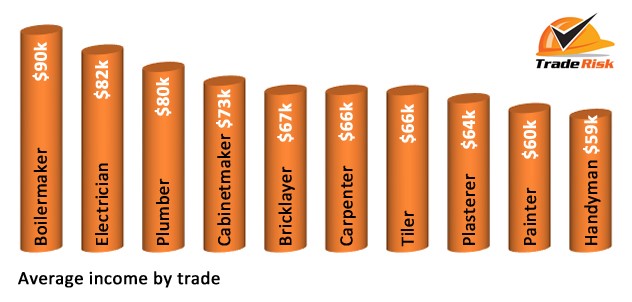
With high transport and accommodation costs, achieving a high paying job is important for Australia’s working population, including its blue collar workers. While it’s difficult to pinpoint the exact amount Australian tradesmen earn, as this differs between trades and the structure of employment (i.e. sole trader, contractor or sub-contractor), Trade Risk have pooled together their resources to highlight the top earning trades in 2015, as based on average income.


THE CHAMPIONS OF 2015

tr
(Graphic by Trade Risk)

Taking the top three spots, boilermakers, electricians and plumbers have topped off the list for the second time in a row. However while these tradies are earning the biggest bucks, it’s the cabinetmakers, bricklayers and painters who have experienced the highest increase in average income, with a 10% rise in earnings.

What’s more, the average income for tradies has increased from $68,900 in 2014 to $70,500 in 2015.


DEDUCING THE FACTS: HOW TO INCREASE YOUR EARNINGS IN 2015 AND BEYOND

If one were to gather anything from these findings, it would be that our Aussie tradies have a world of opportunities to earn bigger dollars in 2015. We’ve identified two strategies that tradies could implement to bring in a bigger return in the year ahead – moving to a higher earning trade, and converting their existing skills to a qualification.


Upping Your Trade

In their time, many tradies have worked across dual or multiple trades, successfully acquiring a range of different skill sets through hands-on experience. Rather than being limited to one trade, they have directed their efforts towards learning the features of each trade, and effectively transferred these expert skills between them.

Making the move to a higher earning occupation in which the tradie is qualified, could open up new opportunities for the tradie to earn more money. Take John Cheakery for example.

After working as a carpenter for fifteen years, and applying his woodwork skills on large structural projects like housing frames and decking, John became interested in concentrating his efforts on more intricate constructions and trim carpentry. Sharpening his skills, this more concentrated focus on finer details led John to complete a large number of internal fitting jobs, creating tables, kitchens and cabinets over the course of six years. Shifting his efforts to cabinet making, John decided to cross-over into this specialised trade, upping his annual earnings in 2015 by a whopping $8,210.


Qualifying Your Trade

In view of the above scenario, should John have acquired all the necessary skills to work as a cabinetmaker in Australia over the course of his 21 years of experience, he would be eligible for a Certificate III in Cabinetmaking.

In addition to his increased earnings, the process of having his skills, knowledge and experience qualified through skills recognition or RPL would not only give John the minimum requirement to achieve trade recognition for Cabinetmaking in Australia, but also help him secure future jobs, roles and promotions, thus increasing his earning potential.

Qualifying your skills, knowledge and experience, especially if you’re competent in all industry units and have the required experience, is a great way of boosting your salary and job prospects as a formally recognised tradesperson. Find out if you can achieve formal trade recognition through RPL with this simple 2-3 minute free skills review.

Remember, it’s never too difficult or late to increase your earning potential. Moving to a higher earning trade or qualifying your skills through Skills Recognition or RPL are only two of the possible ways to go about this in an effective manner. The opportunities , however, are endless. 

Source: https://www.traderisk.com.au/

LeadershipStyle

What’s your leadership style?

CantWorkAnymore

Can’t work anymore? The trick to staying employed.

Sometimes life happens.

Perhaps you’ve sustained an injury that has rendered you incapable of performing your current duties. Perhaps your physical capacity for executing tasks is no longer enough to get the job done. Age may have taken its toll on you and, in effect, slowed down work you were once able to do with the flick of a switch. Maybe you’re simply nearing the end of your career, and are struggling to find employment opportunities, but would love to help someone begin theirs.

You might no longer be cut out for the work you were once able to do, but this doesn’t mean that you are no longer cut for work, especially within your industry. All you need to do is relocate your efforts in a different but related lot, and all it takes is one simple, yet valuable qualification.

Staying employed in your industry with a qualification in Training & Assessment

You’ve probably worked so long in your industry that you know it like the back of your hand. If this is the case, then teaching others the skills you’ve already acquired, whilst also assessing skill sets and levels of proficiency, might be a viable option if you’re looking to stay employed within your industry, albeit in a different capacity. You could become a vocational education teacher; training adviser or training needs analyst; or an enterprise or RTO trainer and/or assessor. Each of these can help ensure that you continue to work within your industry, even whilst no longer able to physically perform the work.

Sound good? It really is, and you could be using it for work within any vocational education and training (VET) industry.

How?

To be able to deliver training and assessment services in the VET sector, you’ll need a few things first.

  1. A Certificate IV in Training & Assessment would come in handy, and by handy we mean it’s a requirement as per Standard 1 in the Australian Quality Training Framework’s Essential Standards for Registration. This qualification is also great if you’re already engaged in the delivery of training and assessment of competence in the workplace, as part of a structured VET program.
  2. The above qualification is not for everyone, and in order to be considered eligible, you must be able to pass certain units of competence. Amongst others, these include:
  • Planning assessment activities and processes as well as assessing competence
  • Participating in assessment validation
  • Planning, organising and facilitating group-based learning, particularly in the workplace
  • Designing and developing learning programs
  • Using training packages and accredited courses to meet client needs.

To find out if you’re eligible for a training and assessment qualification, take this quick 2-3 minute Free Skills Review, or match your skills against the full competency requirements.

  1. You’ll also require evidence of the above units of competency. This can take the form of:
  • Resume/CV
  • References
  • Performance appraisal
  • Portfolio/work samples
  • Photographic and videoevidence
  • Education, training and qualifications
  • Job Description
  • Policies and procedures
  • Workplace communication
  • Bookkeeping and financial records

Perhaps you’re a little more advanced and looking for that little, something extra. If that’s the case, then you might be able to try your skills at the Diploma of Vocational Education and Training or Diploma of Training Design and Development.

Get ready, get set, teach!  

Once you’ve acquired your qualification, you’re all set to make the transition from employee to trainer, developer and/or assessor within your current industry. It’ll ensure that you’re still able to work within the industry you’ve dedicated your entire life to, while making use of your existing skill sets and experience. It’s the perfect way to hold onto the past by remaining employable in the present, and well into the future.

Get your Certificate IV in Training and Assessment using only your existing skills, knowledge and experience with Australia’s leading Skills Recognition & RPL Specialist, Get Qualified Australia. Enquire today on 133 775.

10622786_794129727334007_8392292900744453194_n

MinTrainingCosts

Minimising training costs: The one thing every Manager should be offering their employees

You’re ready to travel to the other side of Australia. Bag loaded in the car, you turn on the ignition and begin the steady drive towards your destination. However, an hour and twenty minutes later, your car stops working. You try to restart the engine, but it chokes out in protest. Your eyes drift to the fuel gauge, and it is only then that you realise that your tank has run out of fuel.

The mechanics present in automobiles are comparable to the mechanisms present in Australian workplaces. Just like car systems, organisations have structures in place which allow them to operate smoothly. However, fail to supply them with the fuel required to get from points A to B, and your company is unlikely to reach its target destination.

Employee loyalty begins with employer loyalty. Your employees should know that if they do the job they were hired to do with a reasonable amount of competence and efficiency, you will support them.
– Harvey Mackay

It is common knowledge that employees are the lifeblood of a company, and as with any engine, you need to treat them with care. After all, an unhappy employee isn’t likely to muster the energy required to reach those end goals, much like a car without gas.

Many companies suffer from low employee motivation, reduced productivity and high staff turnover. However, what they fail to realise is that these are all symptoms of the same cause: a workplace which runs its employees on empty. Thankfully, there are ways to power-up your staff and give them the fuel required to boost motivation and productivity levels.

THE POWER FUEL: A CUSTOMISED TRAINING AND DEVELOPMENT PROGRAM

Implementing a training and development program, catered to the needs of each individual employee or department, can work miracles in boosting the motivational and production levels of your employees, if done correctly. There are many benefits to implementing a training and development strategy within your organisation, and you don’t necessarily have to spend maximum dollars to achieve maximum impact.

BENEFITS OF TRAINING & DEVELOPMENT – THE 4 DEGREES OF RPL

Recognition and Retention

Recognising an employee’s skills and efforts has a proven impact on boosting their levels of motivation, and subsequently, staff retention. After all, a happy employee is one who will stay, mature, and thrive with the company. Rewarding your employees with an accredited qualification or opportunities for personal and professional development is equally beneficial for both your company and employees, and can go far in encouraging productivity, commitment and long-term employment.

Recruitment

A high turnover rate is a clear sign of an organisations’ inability to adequately support its employees, thus limiting any progress towards achieving established goals, particularly when the cost of recruitment, replacement, and training is high. This is why thinking about what you have to offer both current and future employees is such a crucial step for any business.

Implementing an active training and development strategy, as well as qualifications within your remuneration package, will not only help you retain your current employees, but help attract a larger pool of potential candidates who have the required skills, but not necessarily the qualifications.

Regulation

To thrive as a company, it’s important to first ensure that your employees have all the required qualifications to work in your industry, particularly if it’s a heavily regulated one. Times have changed and qualifications are becoming more and more important within a growing number of industries. A training strategy developed through Recognition of Prior Learning (RPL) can help your employees adequately meet regulatory requirements by validating an employee’s competence in their appointed workplace position, without requiring any additional time off work. Using training packages developed by Industry Skills Councils, RPL can ascertain that your workforce sufficiently meets the accreditation requirements and training needs of your industry through the issuing of Nationally Recognised Qualifications and, where applicable, provision of quality gap training.

Redundancy

A company without motivated employees is unlikely to produce the fruits of success. While redundancy is a thing no business envisions for its employees, parting on good terms when such a situation proves unavoidable is of utmost importance to any business hoping to show it cares about its workers. Including Skills Recognition & RPL as part of your redundancy program can help you prepare your dismissed employees for future roles, while maintaining and improving employee morale amongst your remaining employees. It’s also a great way to reward them for their time and service.

DEVELOPING A CUSTOMISED TRAINING & DEVELOPMENT STRATEGY THROUGH RPL

Implementing a customised training and development strategy doesn’t have to be a cost and time extensive endeavour – you don’t have to spend it bigger to spend it smarter! There are a number of ways to successfully apply a training strategy within your business. Following Get Qualified Australia’s simple 5 step process, your staff could be fueled-up in no time.

1. Training Needs Analysis

Begin by identifying the training requirements across your entire organisation or within a particular department. Get Qualified Australia currently conducts a training needs analysis by measuring an employee’s existing skills against nationally recognised qualifications, ensuring that requirements are standardised for all staff.

2. Skills Assessment

A more thorough analysis of individual skill sets, the skills assessment requires employees to select elective units from an existing qualification. These skills are then weighed against industry training requirements, using the evidence of prior learning supplied. The assessment allows for a customised training and development program, relative to the individual learning needs of each employee. The best part is, you don’t need to spend a thing! Get Qualified Australia offers Free Skills Reviews for you to maximise on.

3. Knowledge gaps

Once complete, the skills assessment will identify whether there are any existing knowledge gaps, and whether gap training is required.

4. RPL and gap training

If staff meet all criteria, they can then be issued their qualification through RPL. If they fall short on a unit of competency, they can choose to undergo gap training either online or at home at their own pace

5. Qualification

Once eligible for RPL, the employee is issued a Nationally Recognised Qualification in line with industry standards.

————
Keep your workplace positive and your employees motivated. Power-up with a customised Training and Development Strategy. Download our ‘How To Train Smarter’ ebook for businesses.

Get Qualified Australia currently offers customised strategies for small to large business, completely catered to your business’ corporate and individual needs. Enquire today about getting a customised training and development strategy for your employees.

Are you an employee? Share this article with your Manager to reap the benefits of RPL.